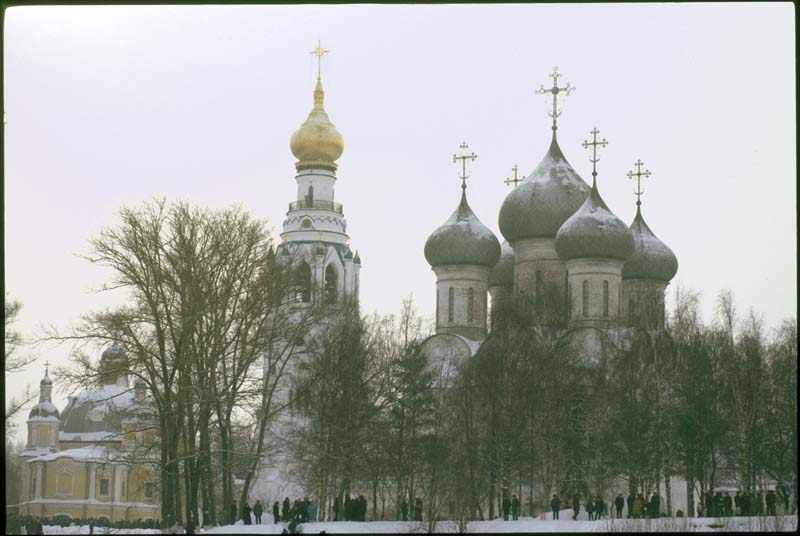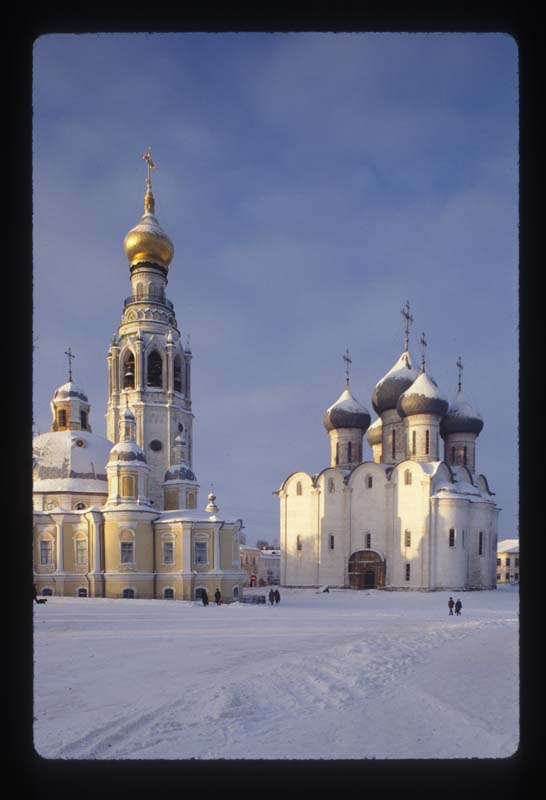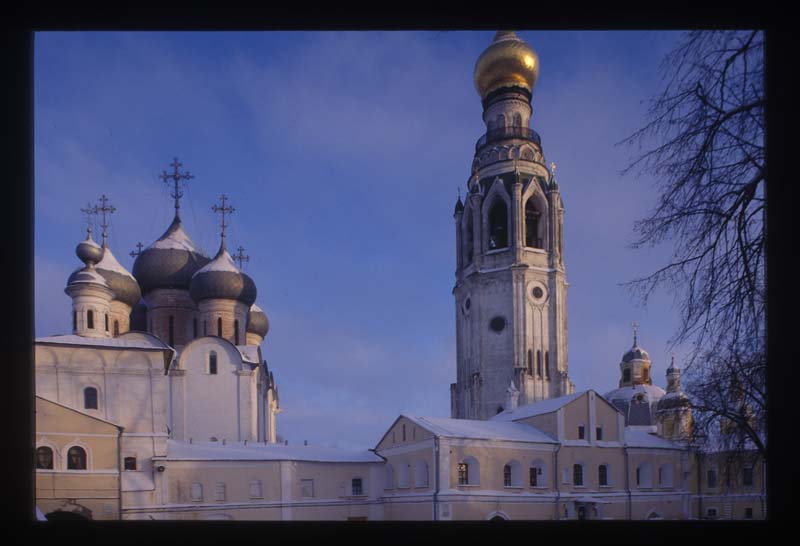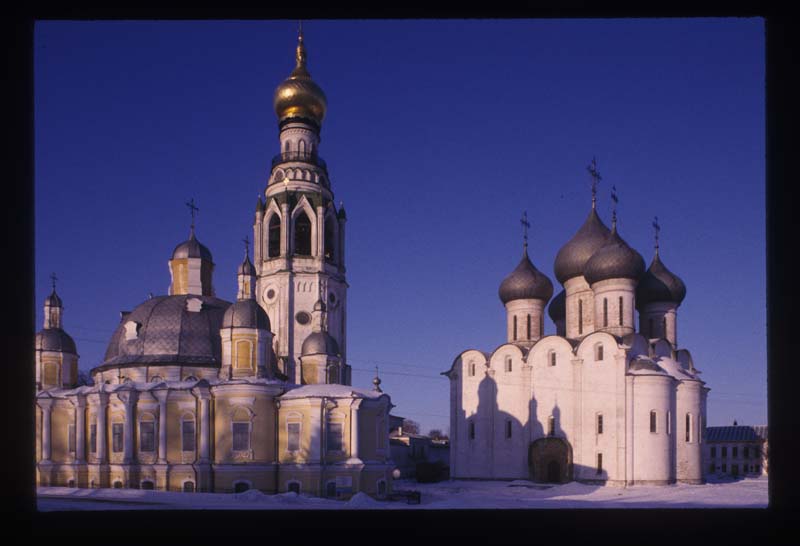
Cathedral of Saint Sophia

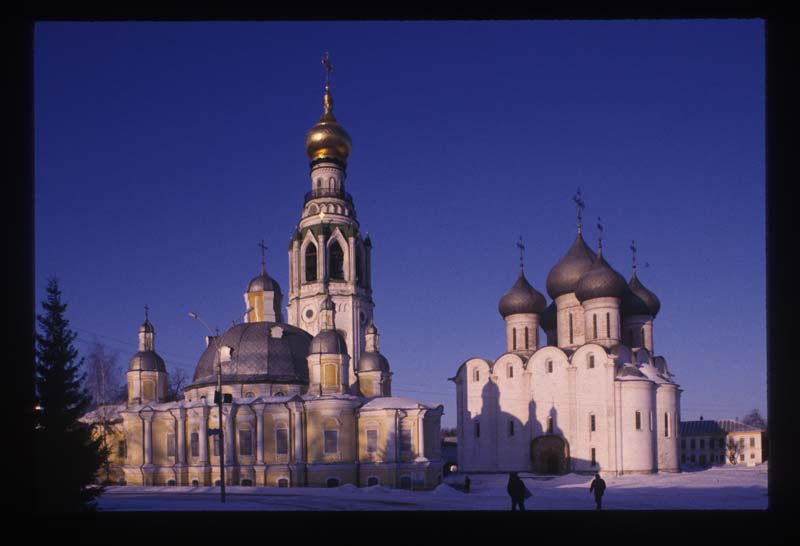
Vologda was still built entirely of wood, until Ivan IV (the Terrible) decided in 1565 to include the town in his private domain or oprichnina. He initiated construction of a masonry fortress to protect his northern residence, but, after 1571, this enterprise was abandoned and the walls were eventually dismantled. However, one important building remained, a cathedral dedicated to the Divine Wisdom – or Saint Sophia.

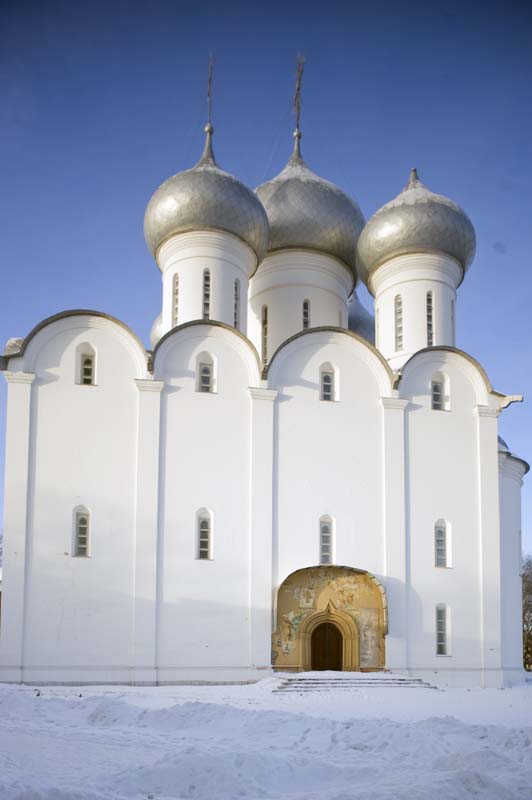
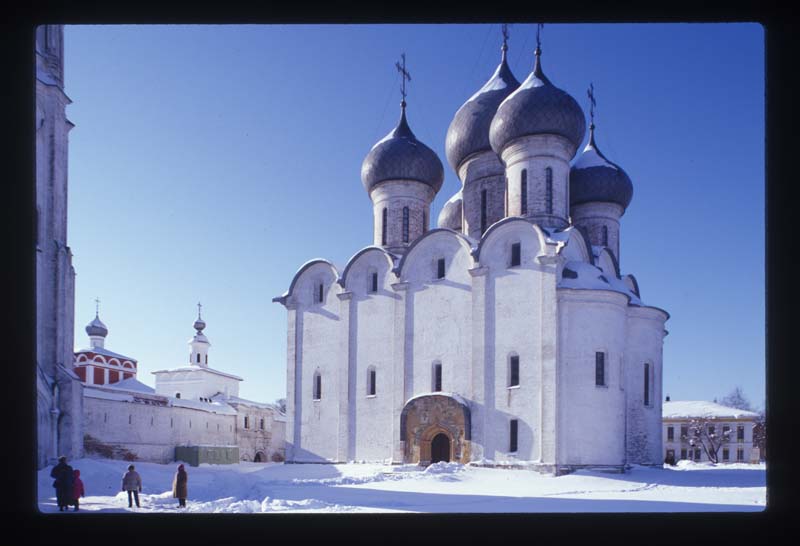
The St. Sophia Cathedral is an excellent example of 16th-century church architecture based on Aristotle Fioravanti’s august Dormition Cathedral (1475-79) in the Moscow Kremlin. The cathedral was intended to serve as the seat of the Vologda bishopric, which had been expanded in 1571, but, for political reasons, the cathedral was not consecrated until 1588, four years after Ivan’s death.

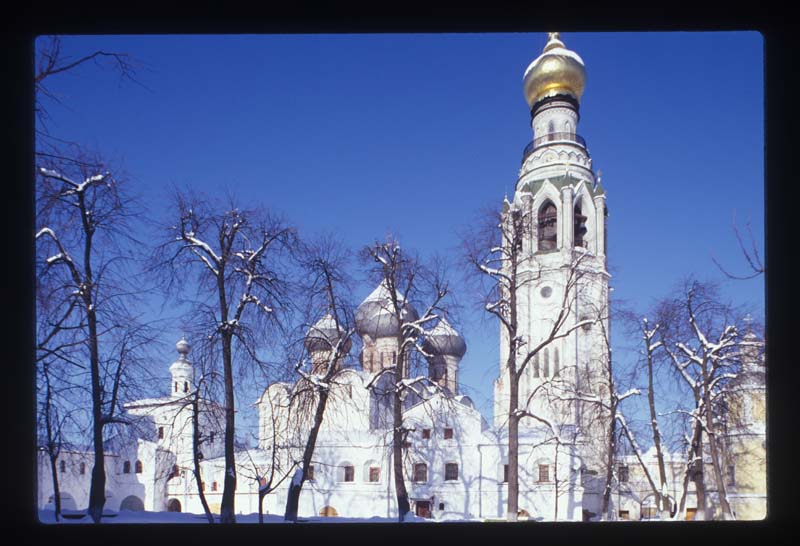
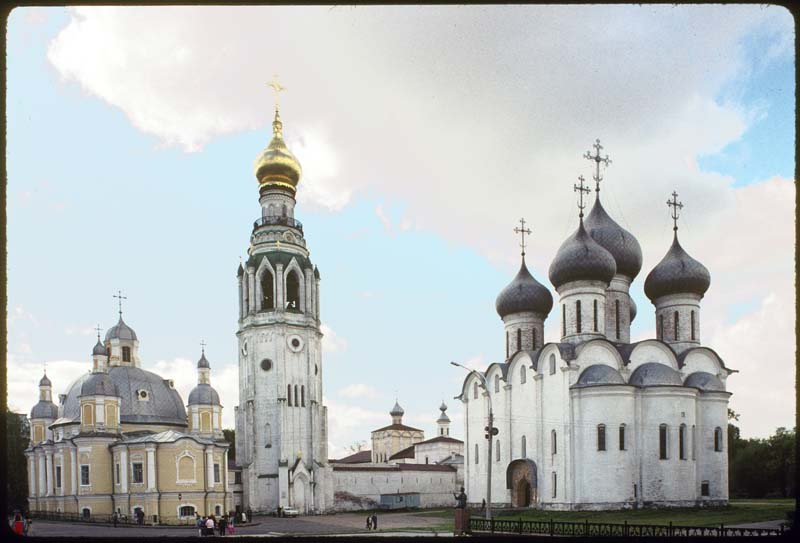
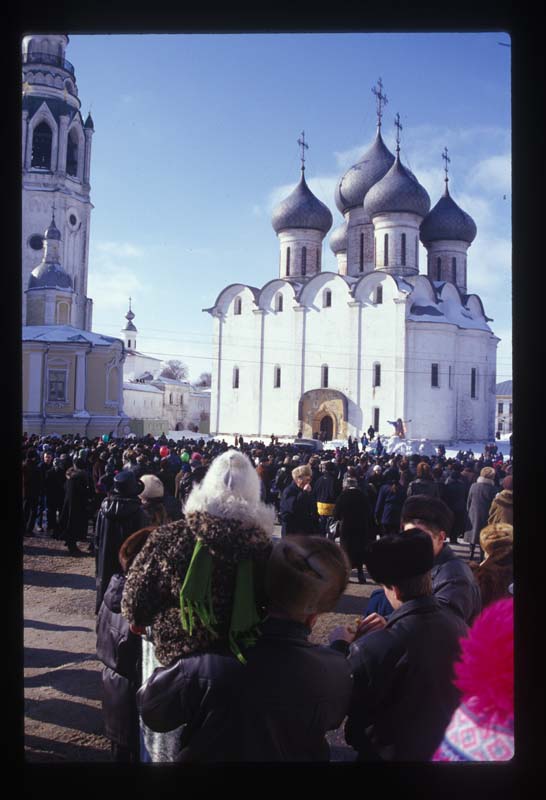
Fortunately, the Sophia Cathedral has largely preserved its sixteenth-century form. Its whitewashed brick walls are segmented and lead to a roofline of semicircular gables, or zakomary, restored after World War II. The onion domes, which provide a striking culmination to the structure, were rebuilt in their present form during the 17th century. The elaborate iron crosses above the cupolas were added in 1687.

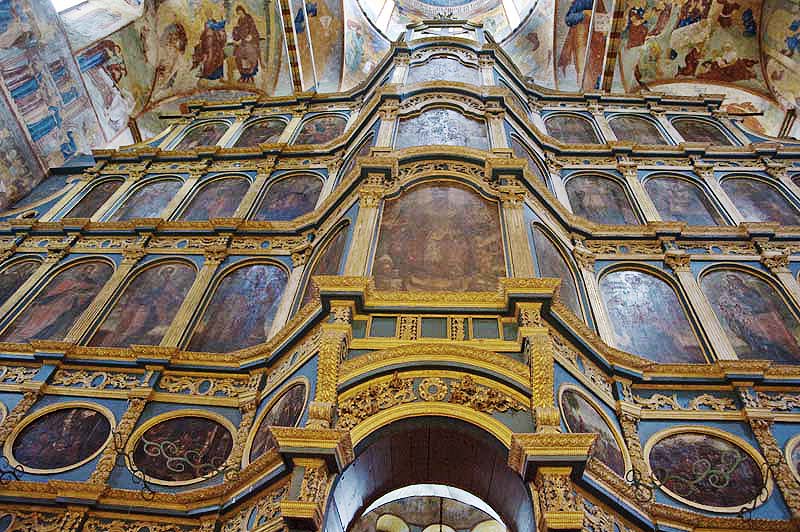
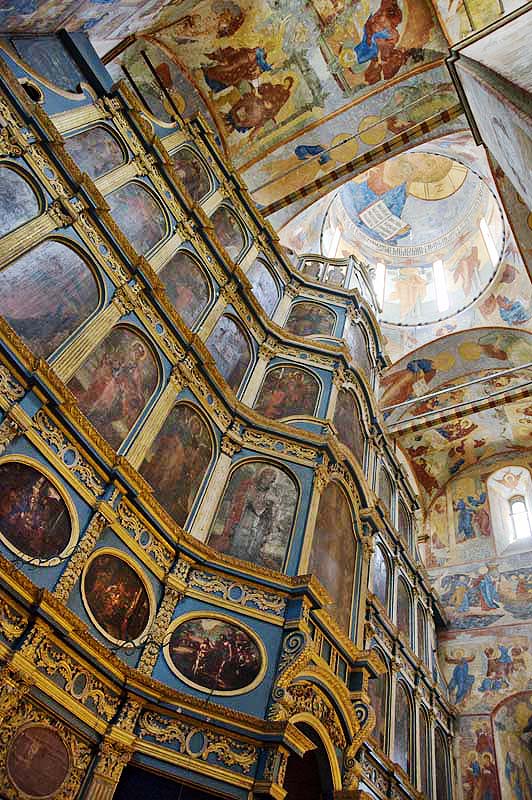
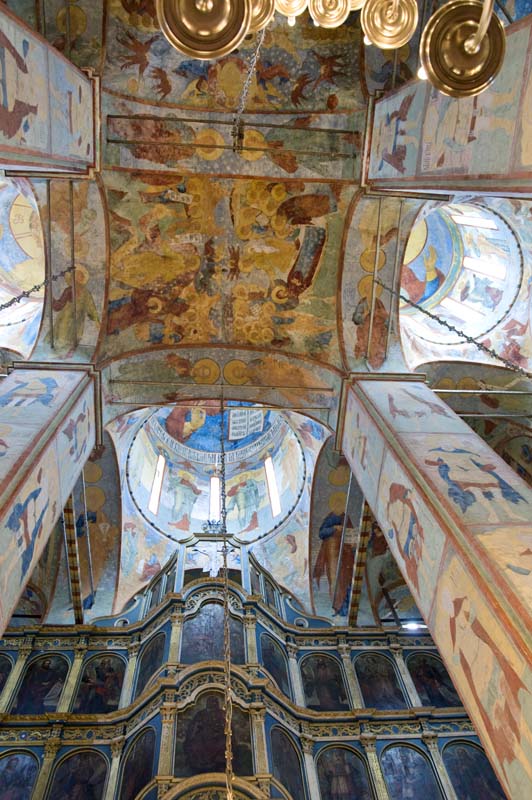
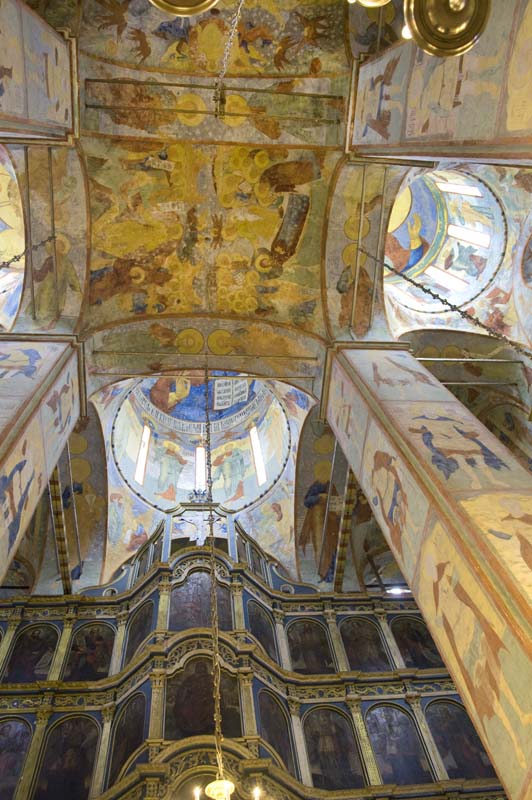
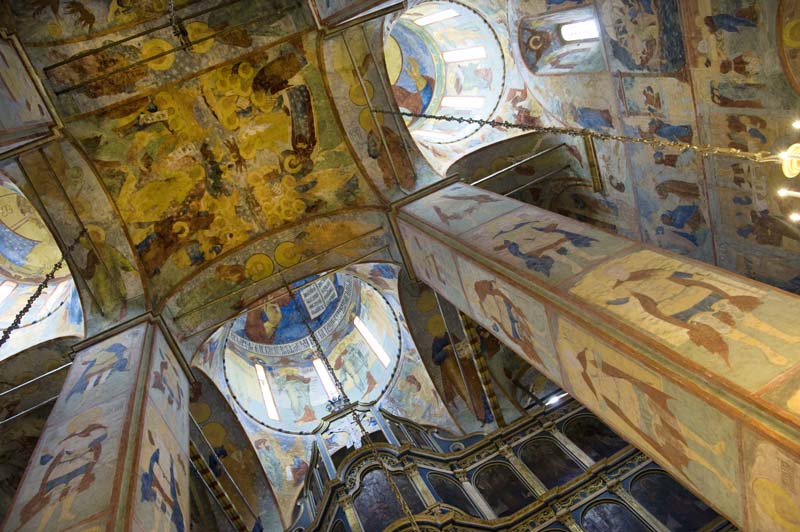
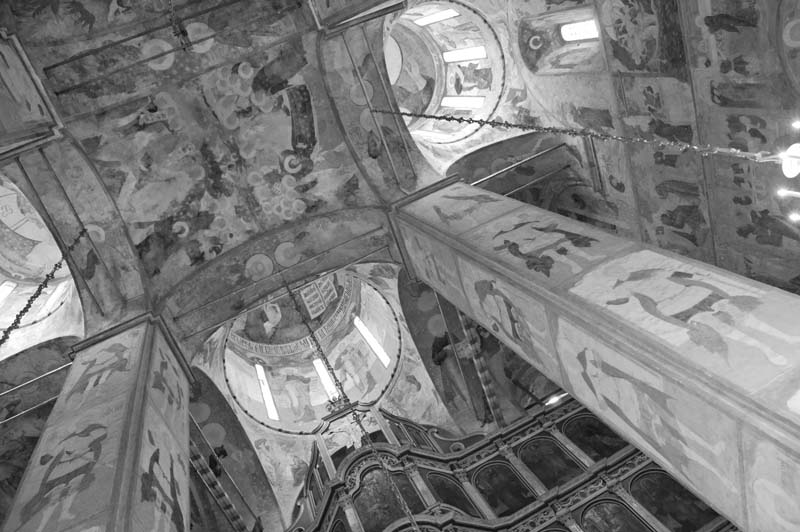
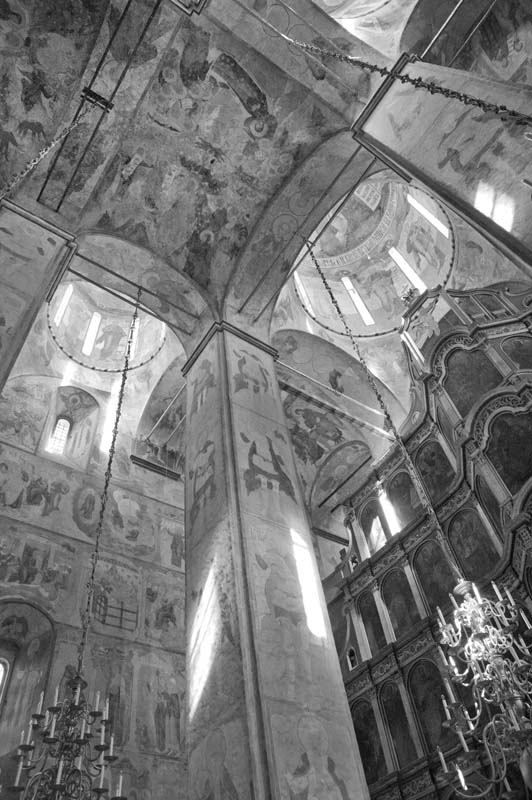
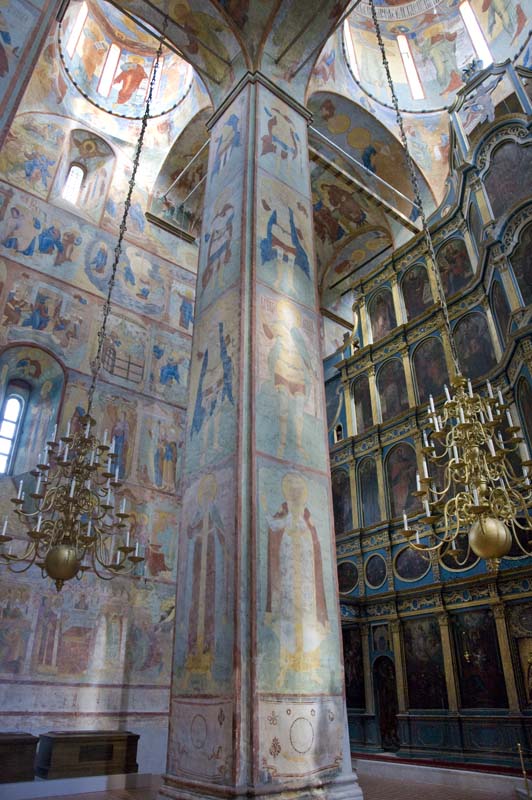
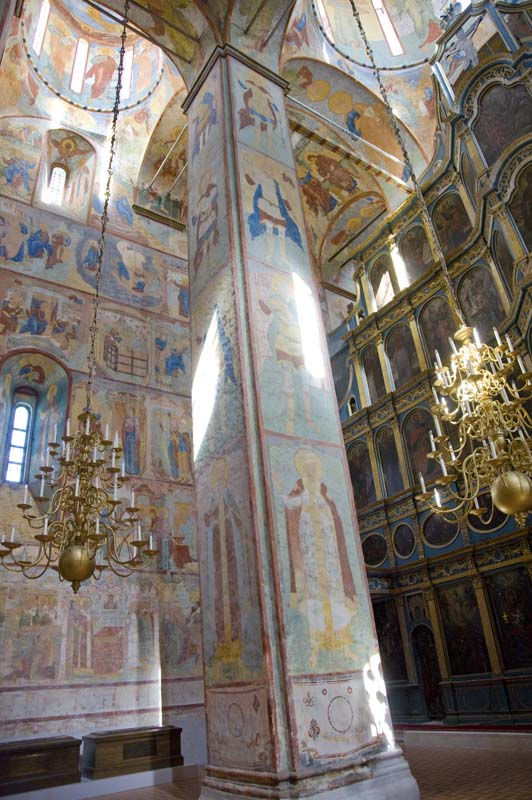
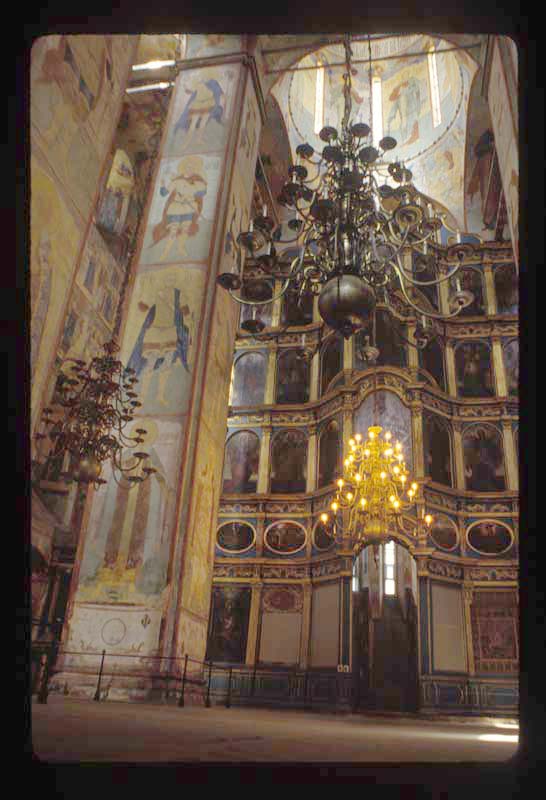
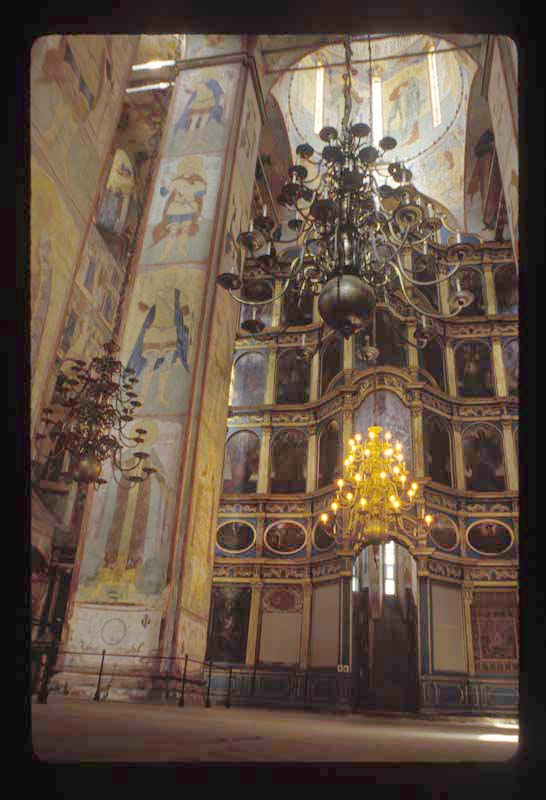
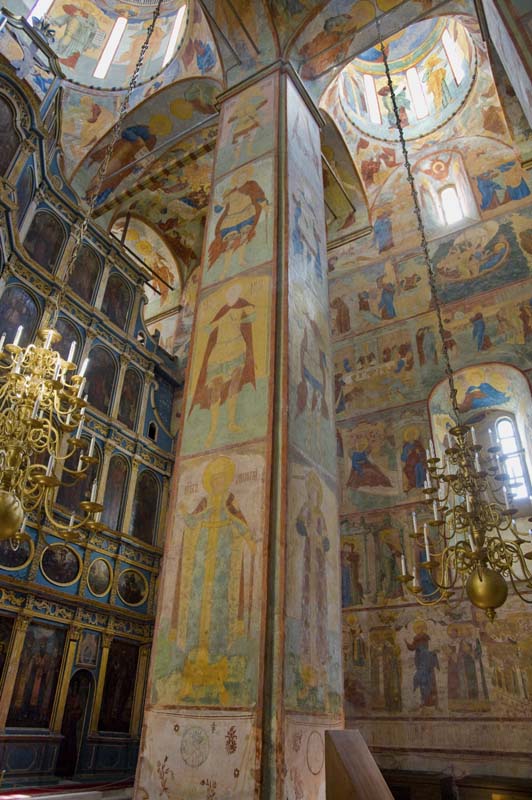
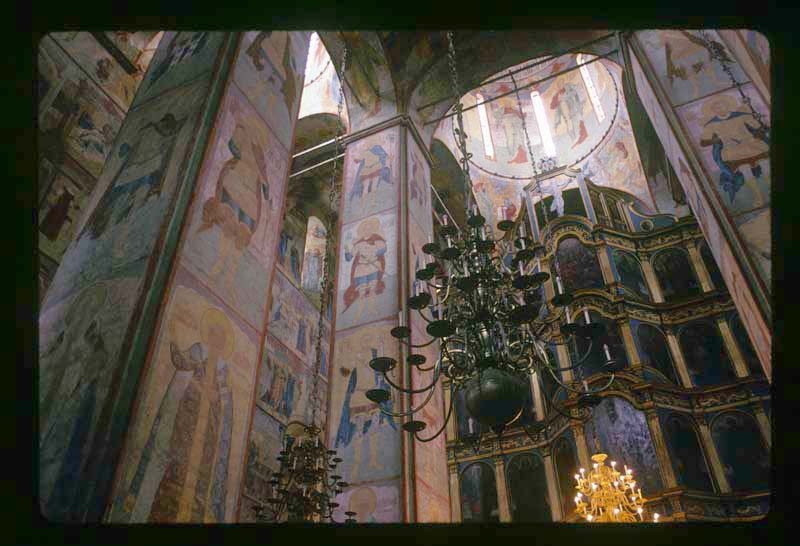
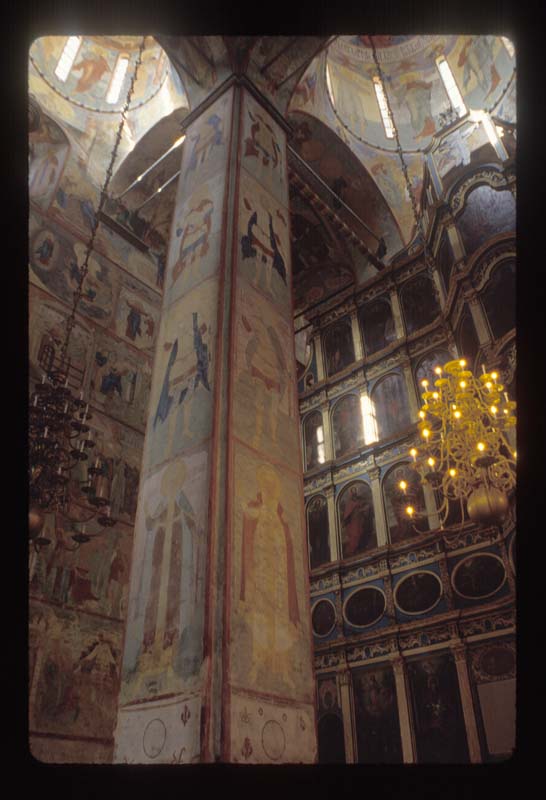
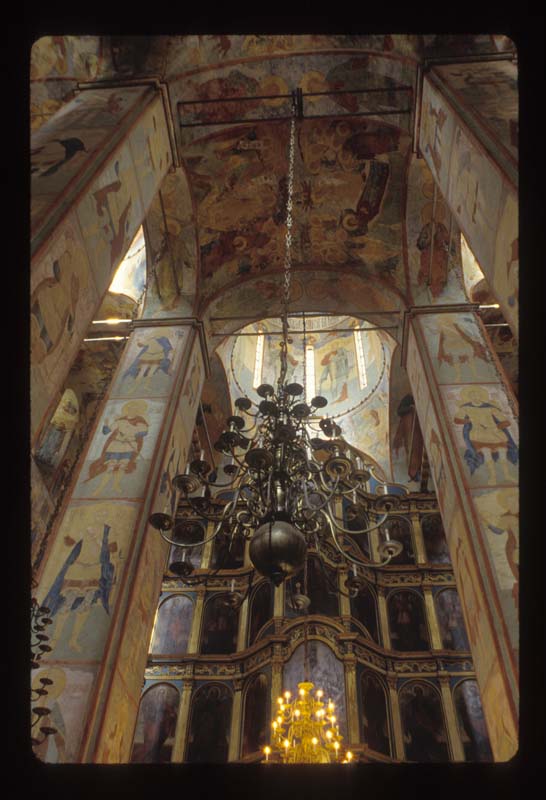
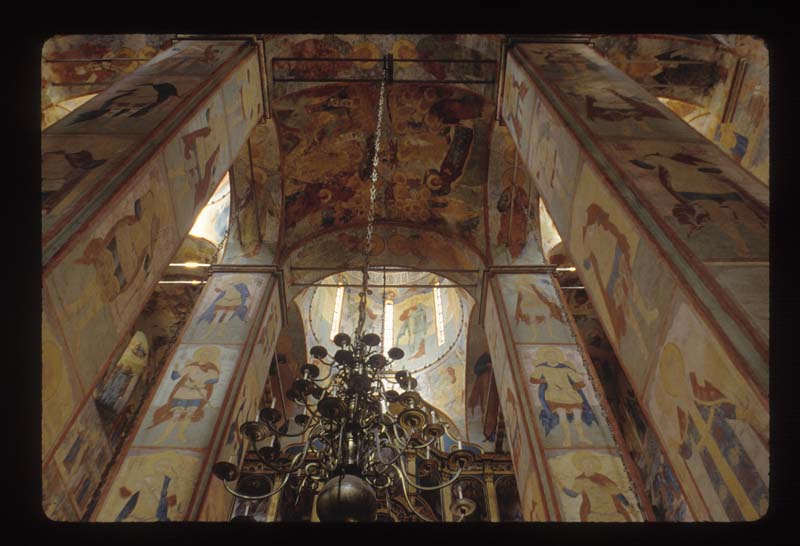
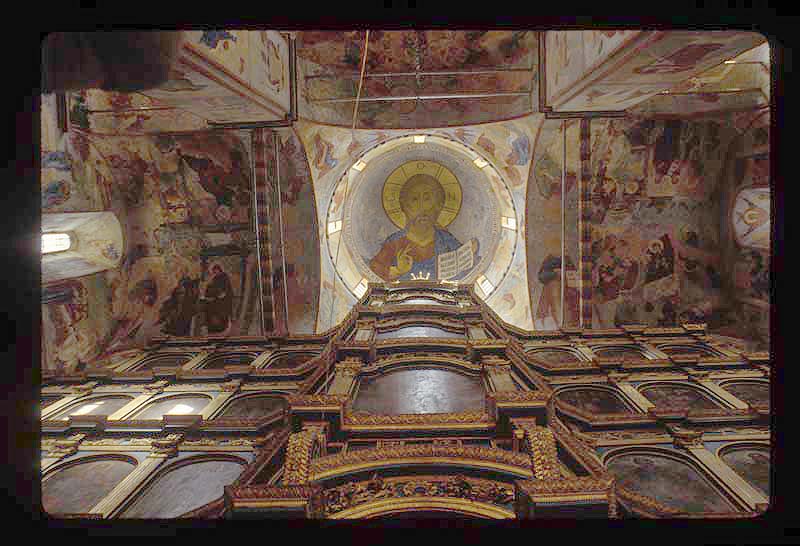
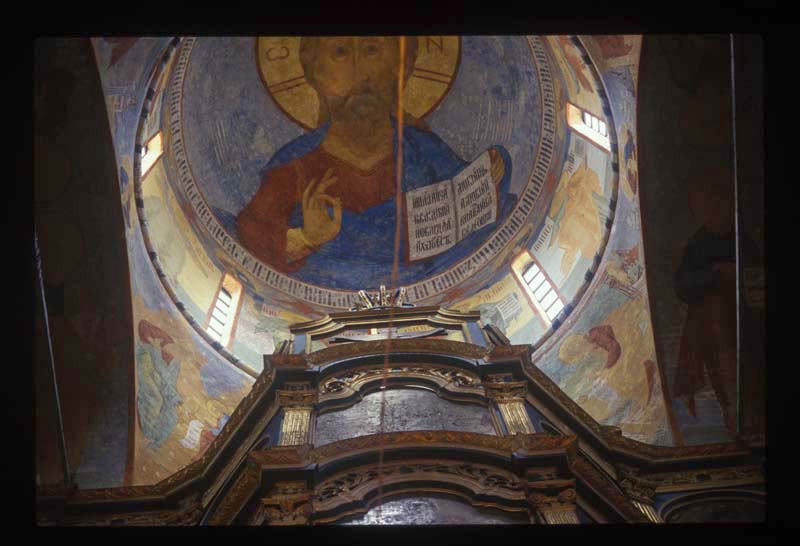
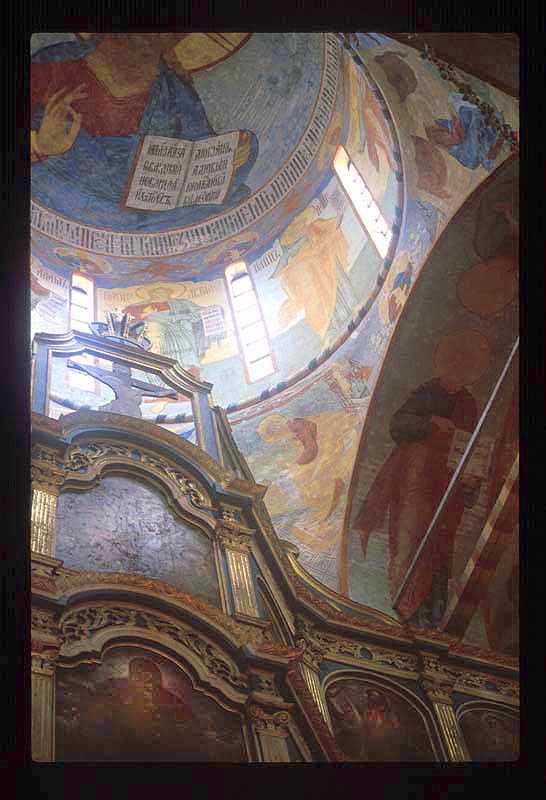
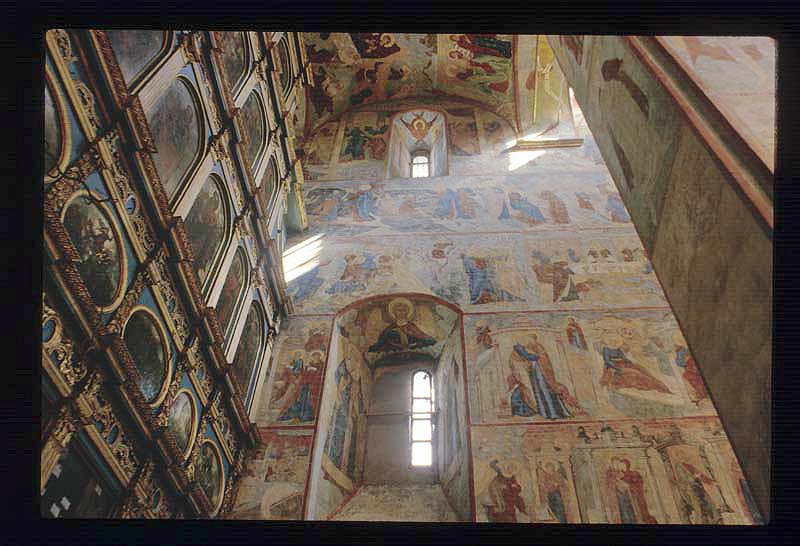
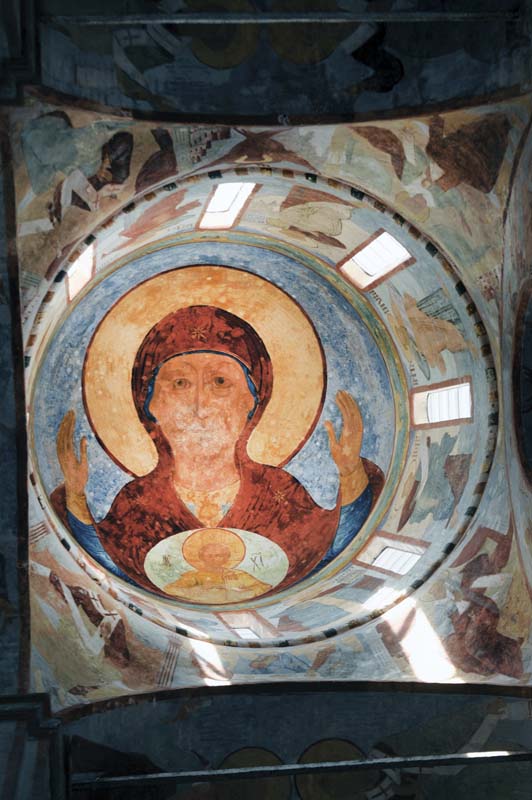
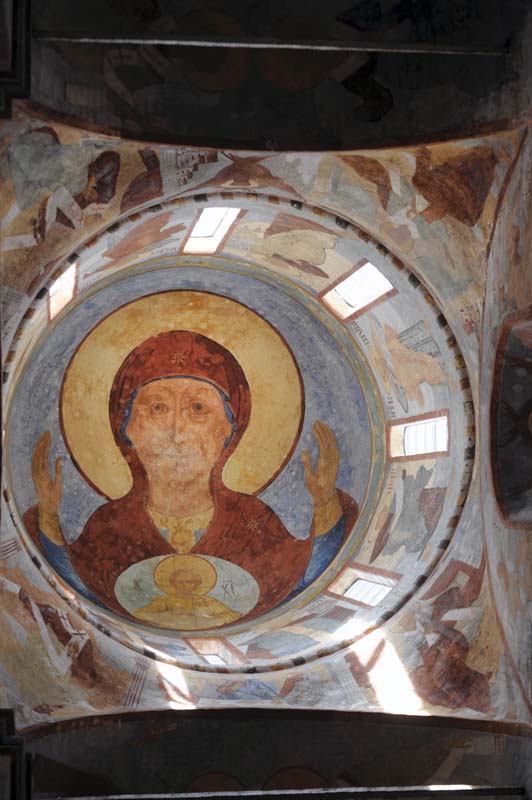
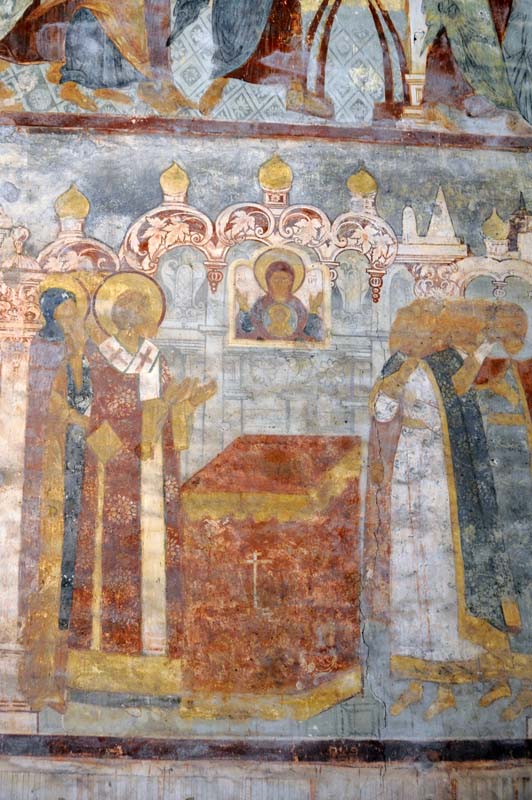
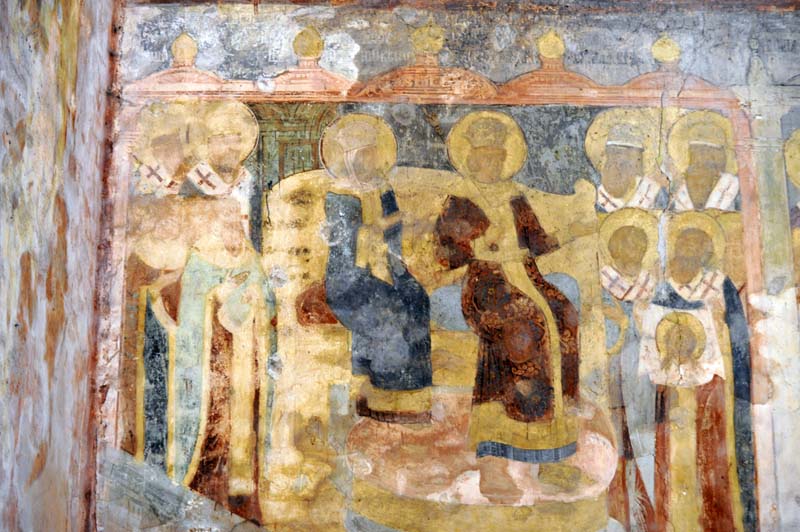
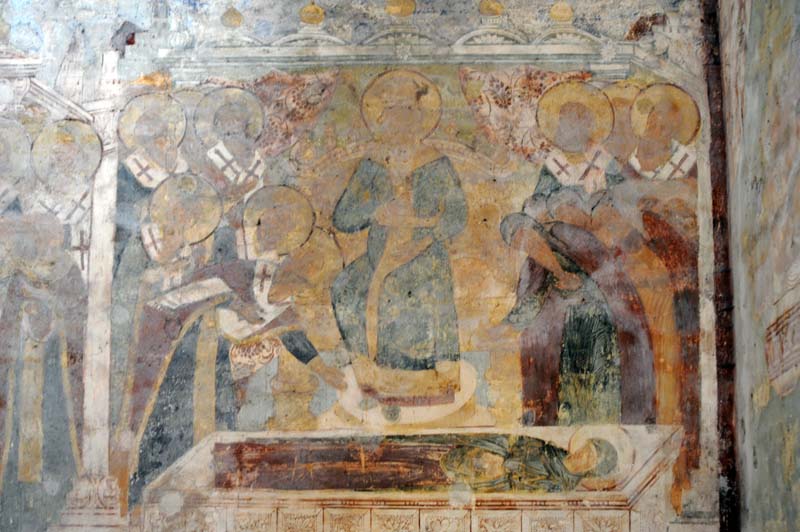
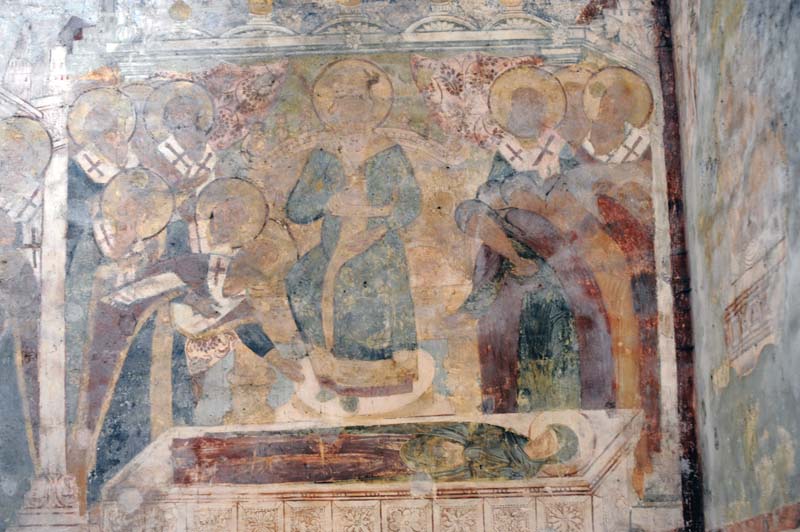
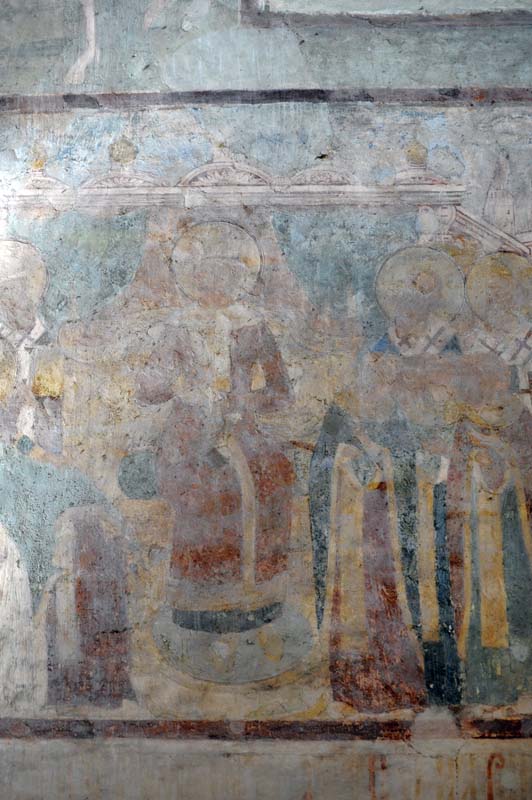
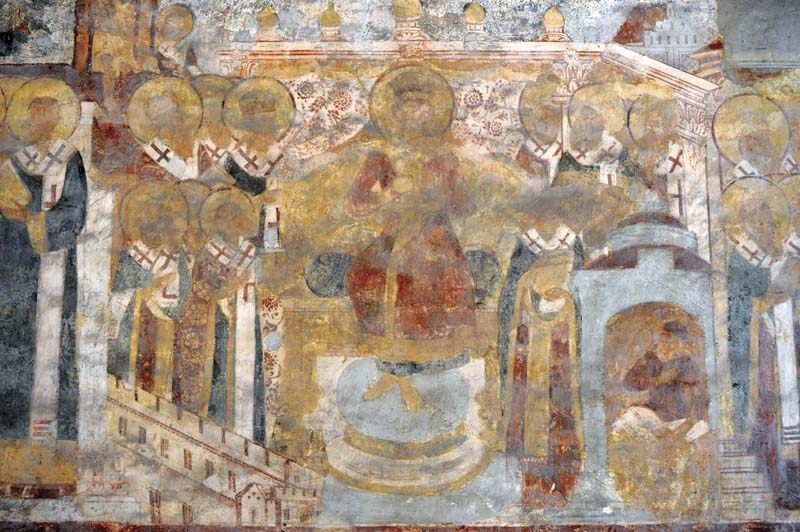
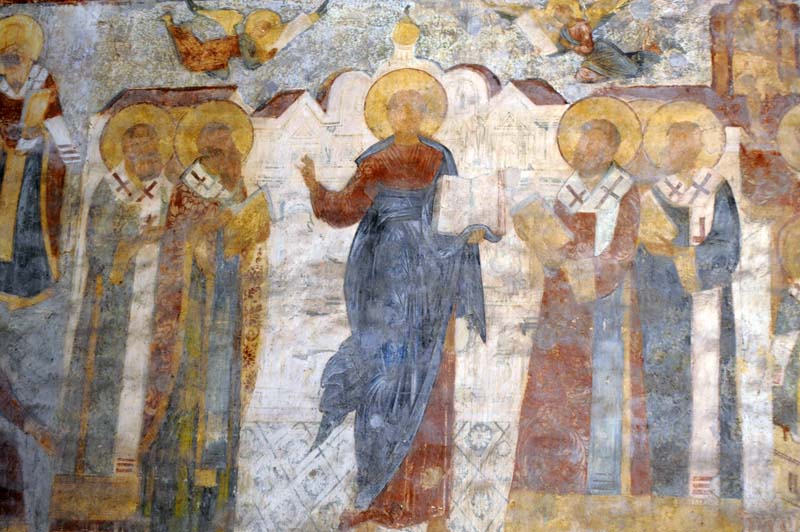
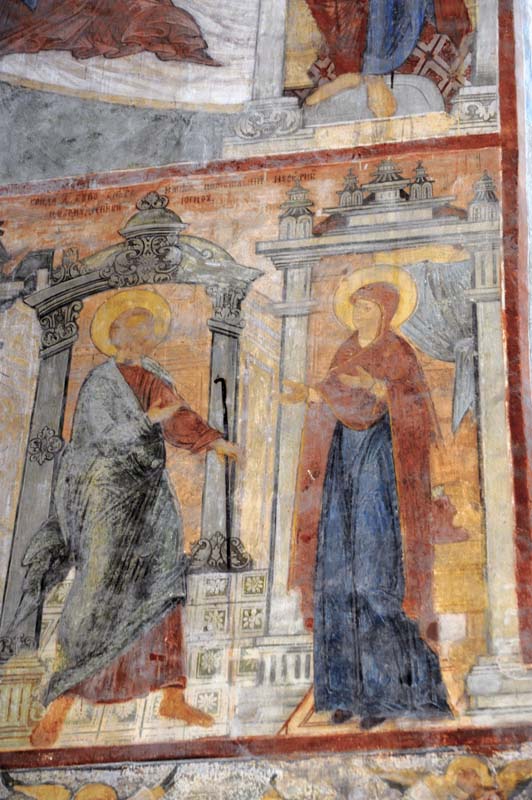
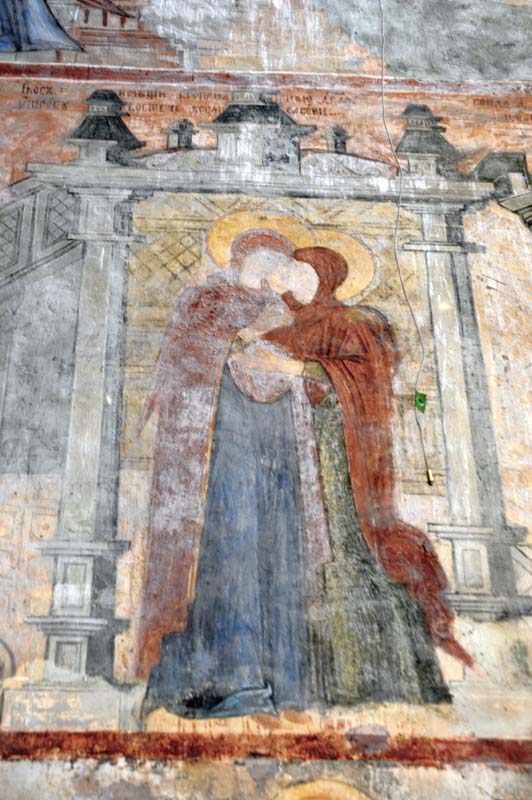
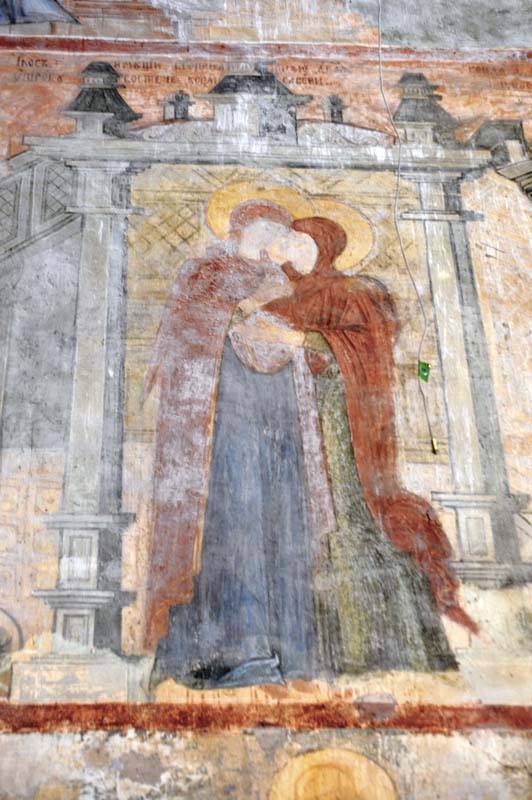
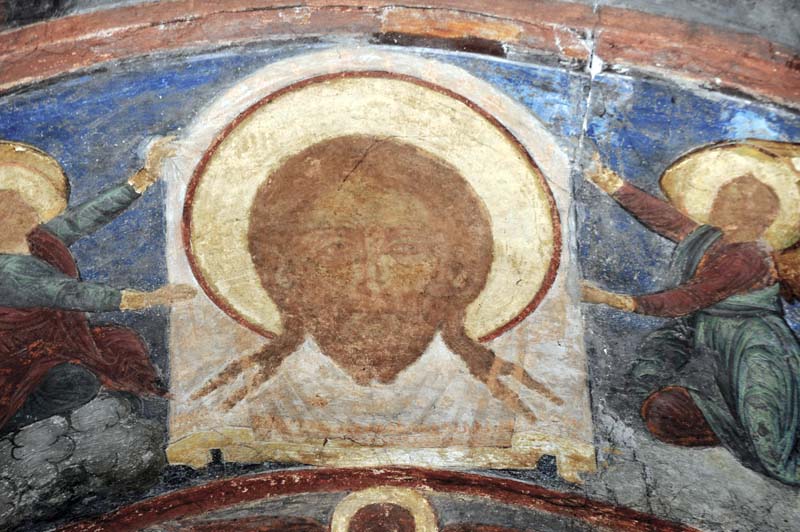
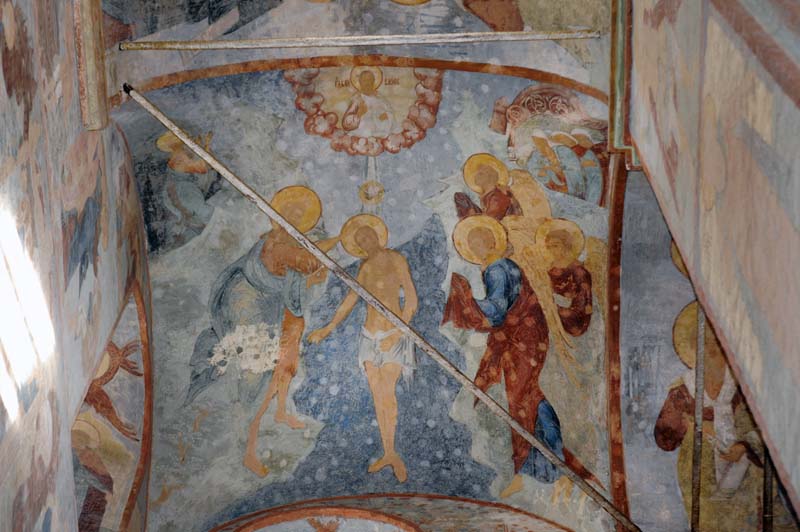
The monumental simplicity of the exterior is imposing, but the Sophia Cathedral reveals its true grandeur on the interior, which contains some of the best-surviving examples of 17th-century Russian frescoes [and one of the largest icon screens in the Russian north].

In 1686, Gavriil, the archbishop of Vologda, commissioned the painting of the enormous interior space by a group of some thirty artists from the city of Yaroslavl. In an era when the Western view of art as an occupation was entering Russia, the artists painted an elaborate inscription on the lower part of the interior with a list of their names and a proclamation on the beginning and end of their work, from July 1686 to the summer of 1688.

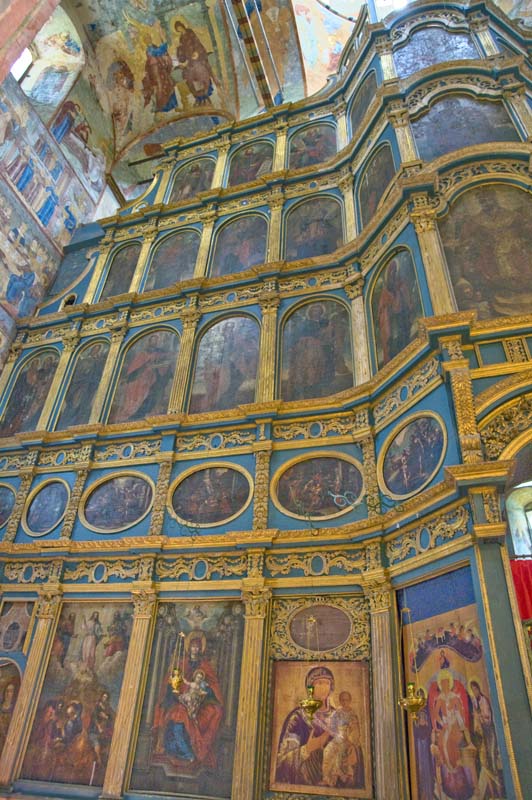
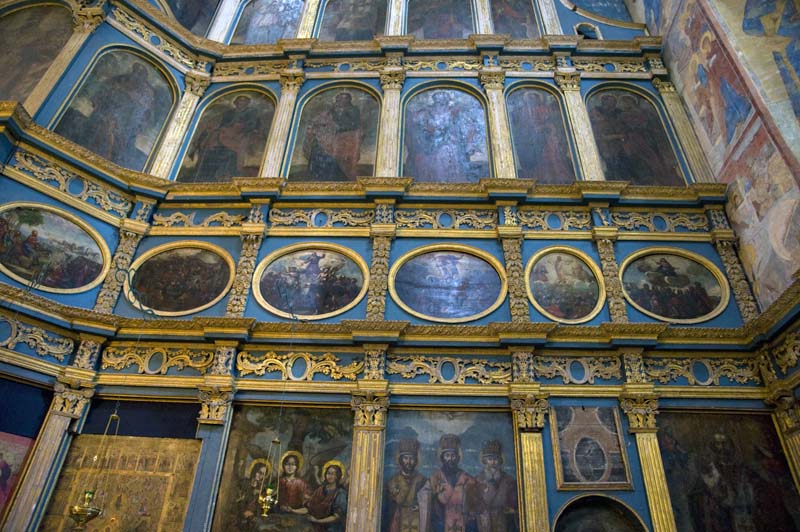
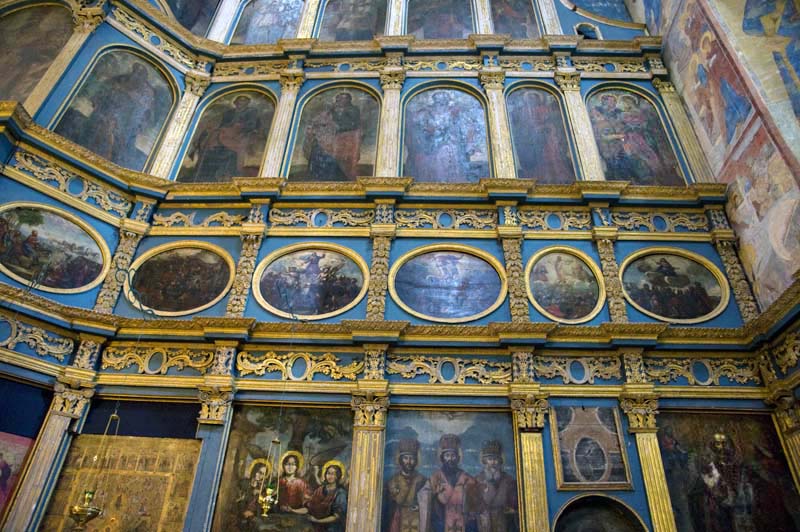
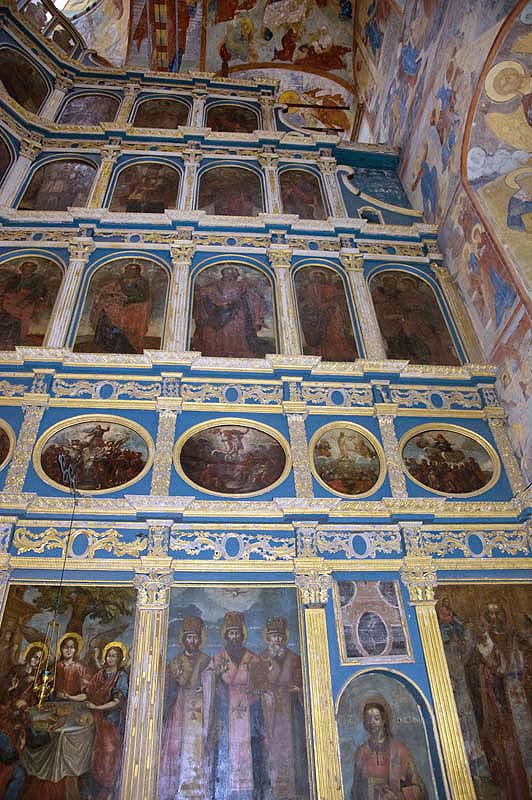
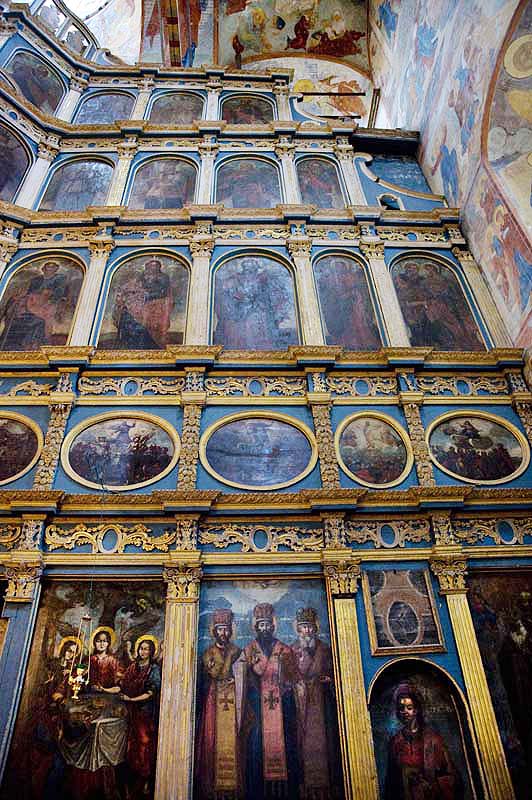
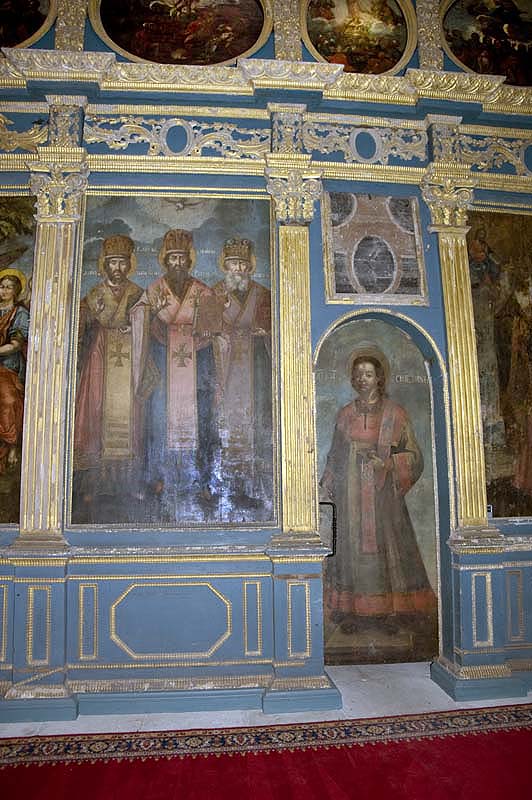
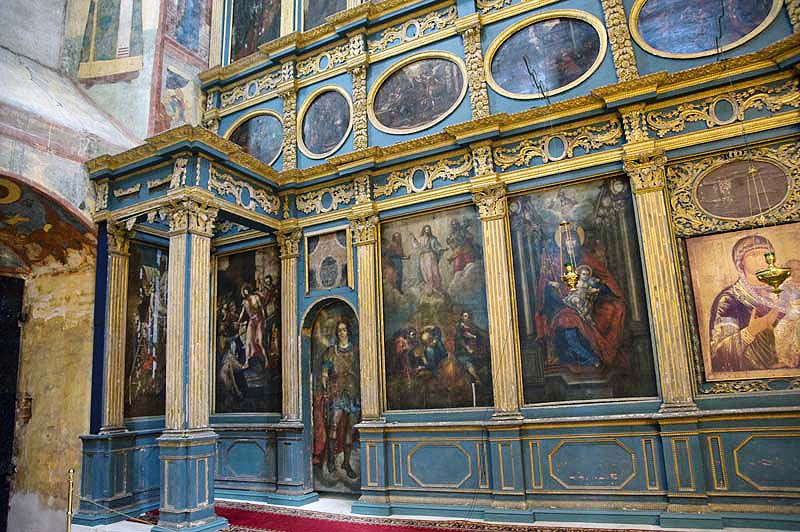
The Sophia Cathedral’s painterly art is not limited to its frescoes. The east side of the interior contains an icon screen that is among the largest in the Russian north, over 60 meters in height. The frame of this towering structure was completed in 1737 by Arsenii Borshchevskii, a local monk of Polish extraction, to replace a late 17th-century iconostasis badly damaged by fire in 1724. 

Apart from the Local Row of ancient icons at the bottom, the new icons were completed a year later by Maksim Kalinin Iskritskii – also of Polish descent. Painted in oil on pine boards, these icons show a mannered western style favored by Russia’s church hierarchs and by the Russian court. 

In the early 1690s, shortly after the magnificent frescoes were painted, the young Tsar Peter Alekseevich (later Peter the Great) would keep company with Protestant Europeans in Moscow’s “German Quarter”, created by the Orthodox Church in the mid-17th century to restrict foreign influence. During the formative 1690s, Peter came to see the advanced technology and well-governed states of Protestant Europe as a model for Russia. The cosmic vision portrayed in Vologda’s Sophia Cathedral was on a collision course with a modern, secular view of Russia’s place in the world promulgated by Tsar Peter.