
Cathedral of the Transfiguration of the Savior
Exterior

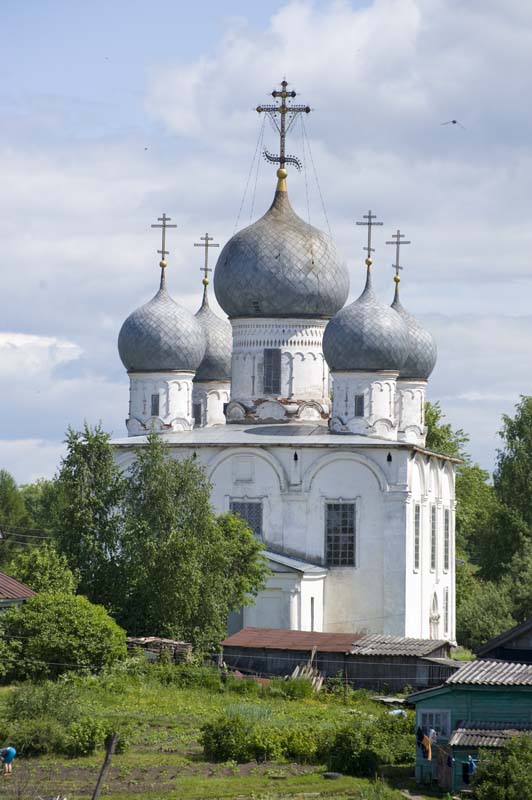
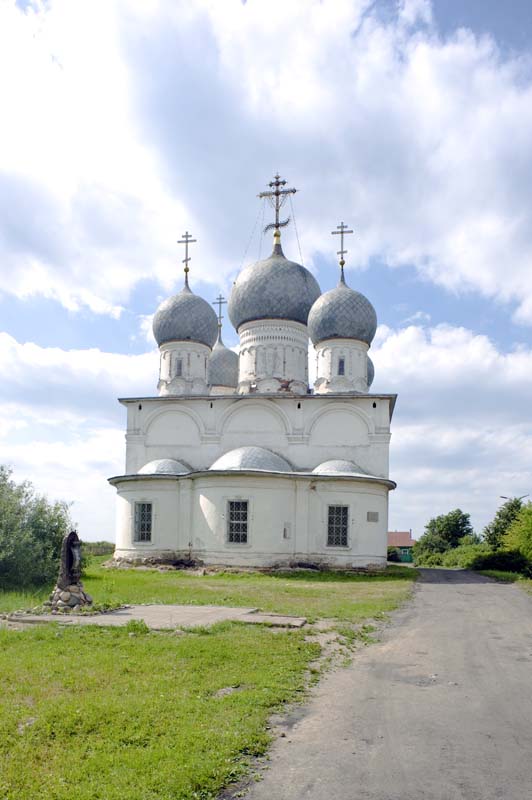
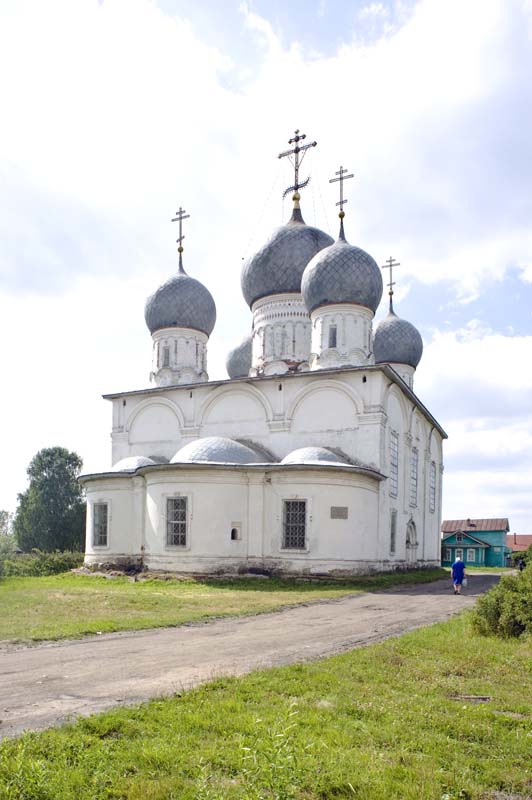
Interior











Belozersk is one of the earliest historically attested towns in Russia, first mentioned under 862 in the ancient chronicle “Tale of Bygone Years.” The details of its origins are lacking, and, in fact, its location changed more than once. The town was established in its current location in the late 14th century, and in the 15th century, it became a bulwark on Muscovy’s expanding northwestern frontier.
Tsar Ivan III (the Great) understood this strategic position, and in 1487 constructed a large fortress, or kremlin, whose earthen ramparts still stand. The Belozersk citadel is one of the best surviving examples of a type of earthen fortress widespread among the eastern Slavs. Roughly quadrilateral in shape, the kremlin was formerly protected on at least two sides by a moat. Its interior southwest portion is occupied by a pond essential for an active fortress.
In the late 17th century, the kremlin ramparts still had a log wall containing eight towers and two gates. No longer of military significance, the decaying log walls were removed in the 18th century. The main entrance to the massive earthworks was from the east. In the late 18th century a graceful arched brick bridge was built to span the ancient moat.
As befitted the regional importance of Belozersk, the fortress interior was arranged around a cathedral compound. The existing Cathedral of the Transfiguration of the Savior was begun in 1668 during the reign of the first Romanov Tsar Alexei Mikhailovich and completed in the late 1670s, with a narthex added in the early 19th century. Support for the cathedral’s construction came from both Moscow and local sources.
The Transfiguration Cathedral follows a 16th-century pattern typical for large churches in provincial centers. The facades are each divided into three bays capped by semicircular gables known as zakomary. The cathedral is crowned with large cupolas and high ornamental iron crosses. They are visible in both my photographs and Prokudin-Gorsky’s. The drum, or cylinder, beneath each cupola displays an arched pattern with slender attached columns.
Even with its tall cupolas, the height of the Transfiguration Cathedral seems truncated, due in part to a slight subsidence of the boulder foundations into the soft ground–a common occurrence with medieval churches in northwest Russia. Presumably, the builders decided not to risk a taller structure on such a base.
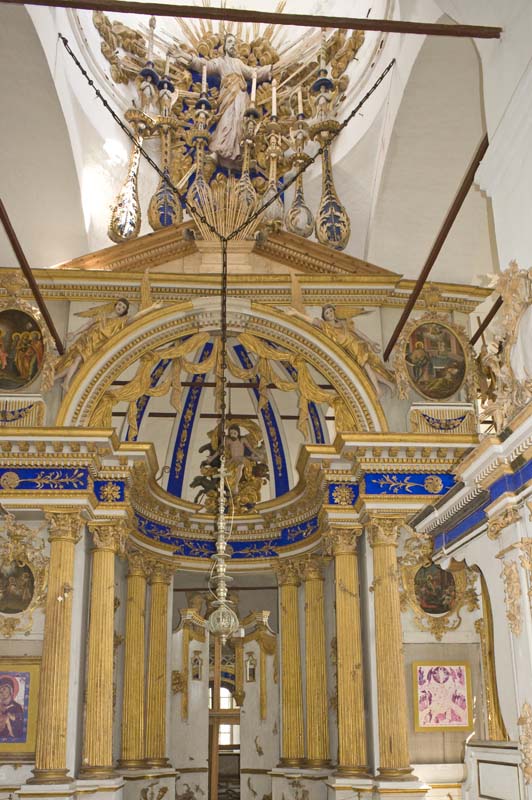
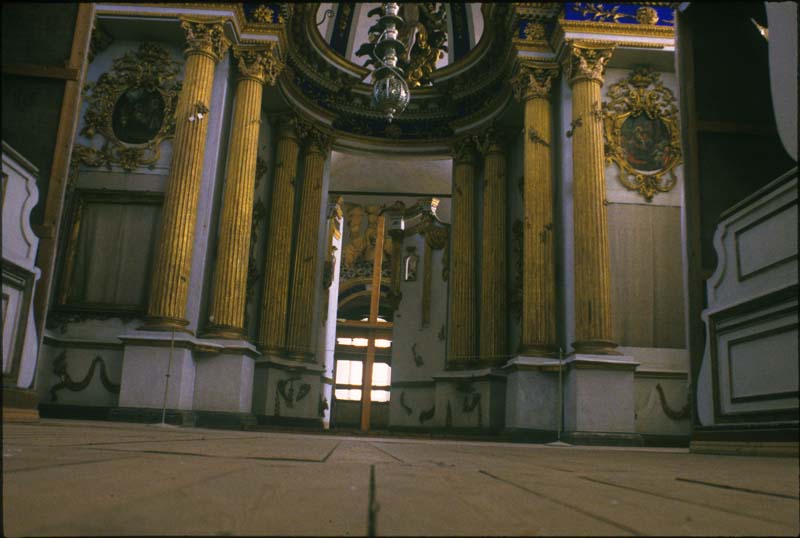
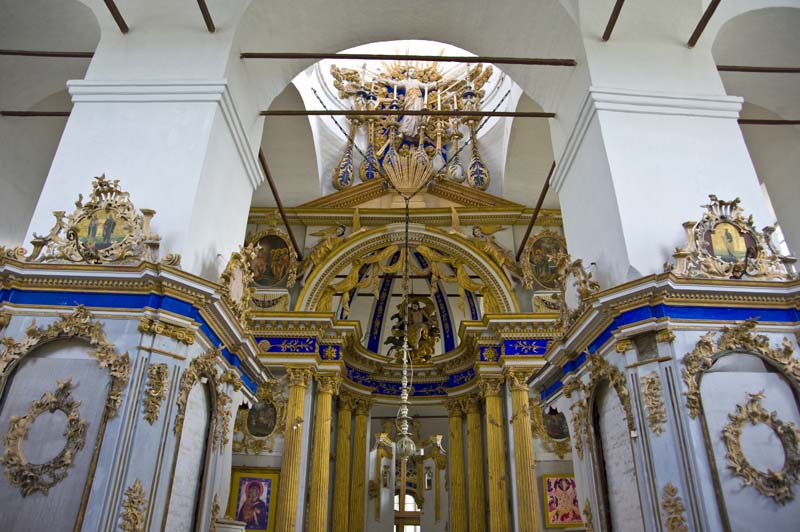
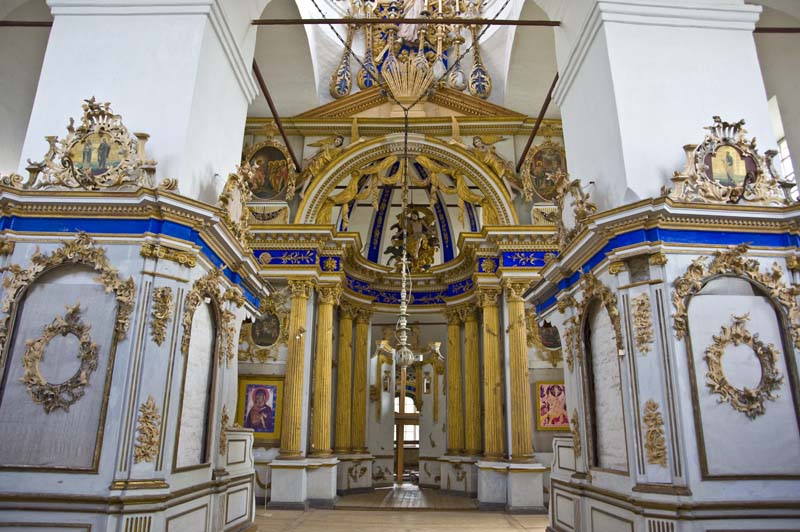
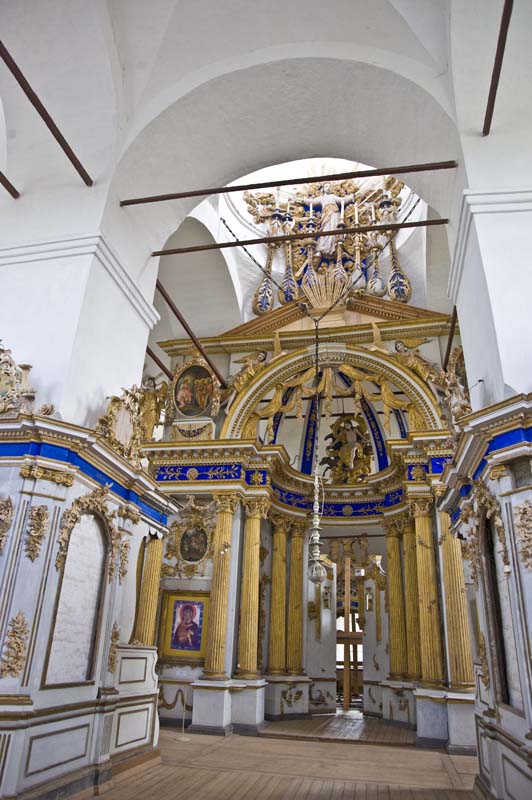
The cathedral interior was not painted with frescoes, which allows visitors to concentrate their attention on one of the most remarkable icon screens in Russia. The main space is defined by two massive square piers, faced on their lower level with carved, gilded icon frames. The piers support the west and central cathedral vaults and structure the view of the iconostasis.
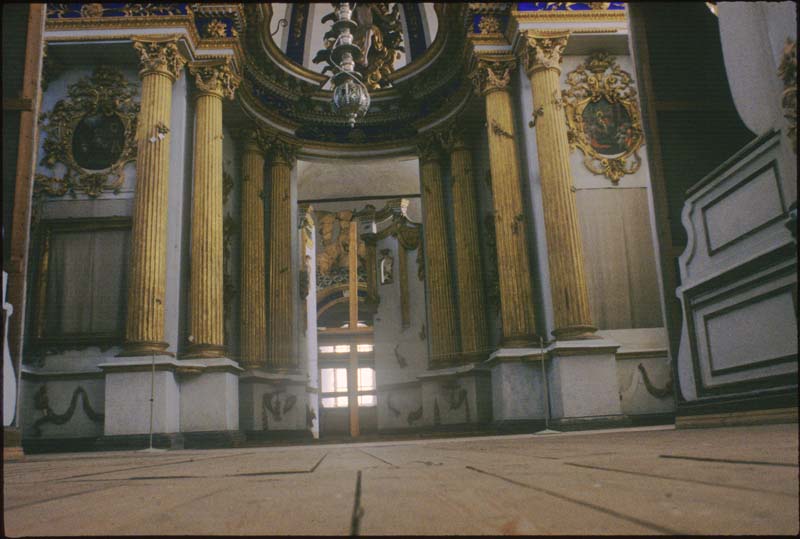
The typical Russian Orthodox icon screen forms a grid of two dimensions for the ascending rows of icons, with the main portal to the altar—the Royal Gate—in the center. At the beginning of the 18th century, there appeared a more dynamic form of screen influenced by Baroque art. It emphasizes a greater sense of depth in the center surrounding the Royal Gate.
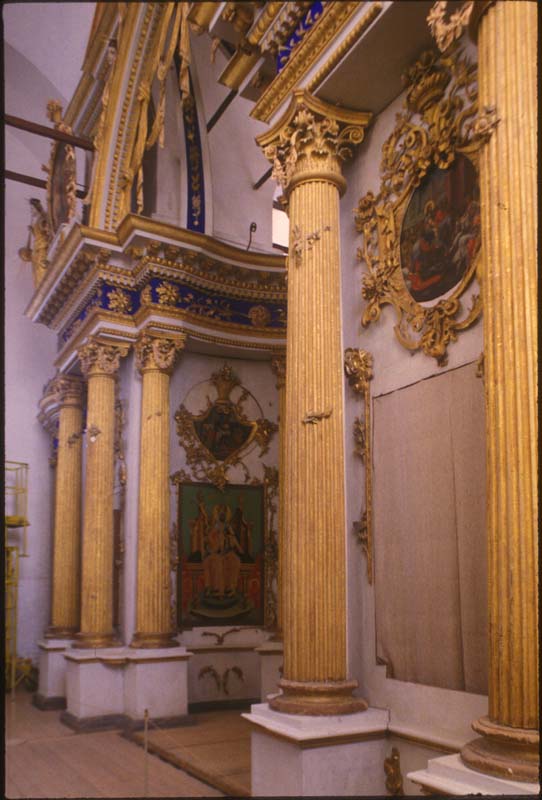
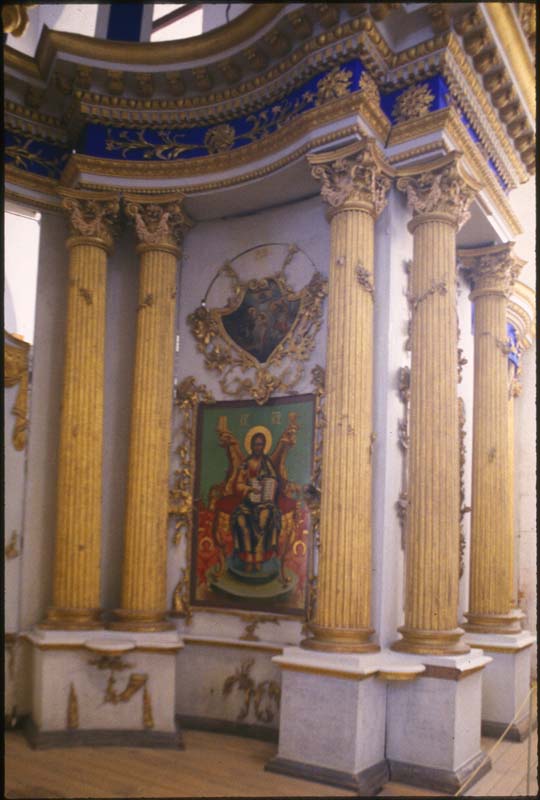
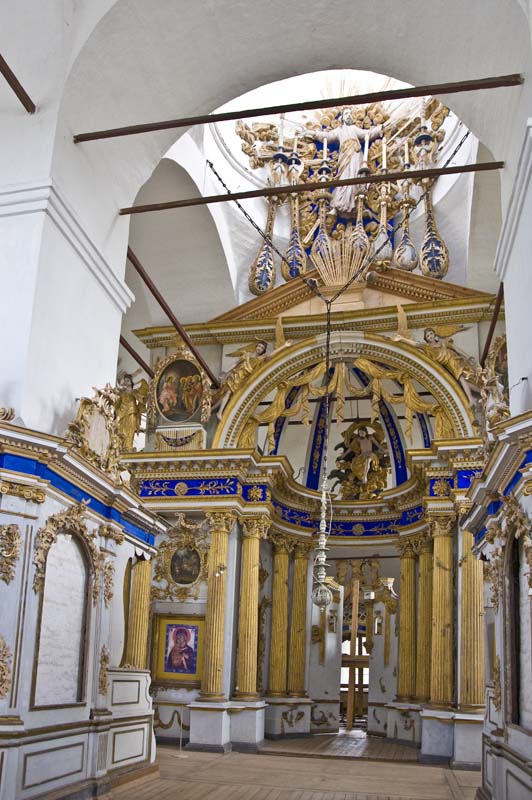
The icon screen at the Belozersk Transfiguration Cathedral shares this characteristic although it was created decades after the waning of the Baroque, perhaps at the beginning of the 19th century. This icon scree represents a stunning merger of the Baroque and neoclassical styles, a synergy of vigorous northern wooden carving with refined elements characteristic of St. Petersburg.
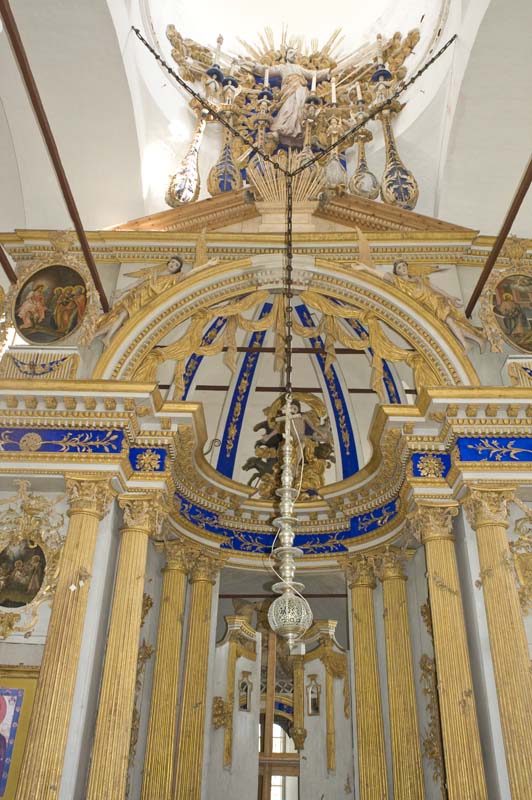
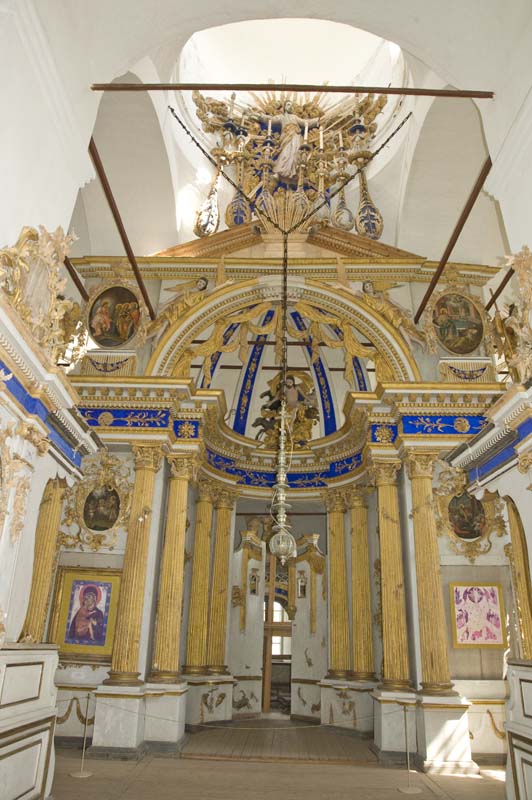
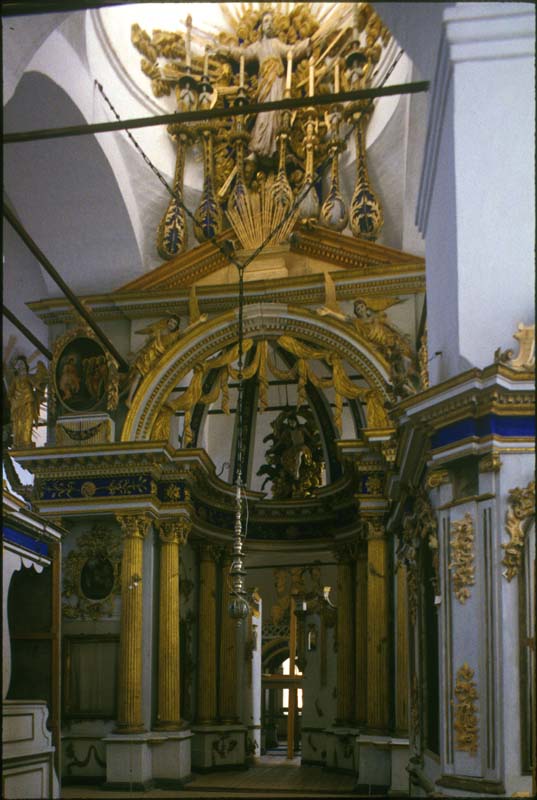
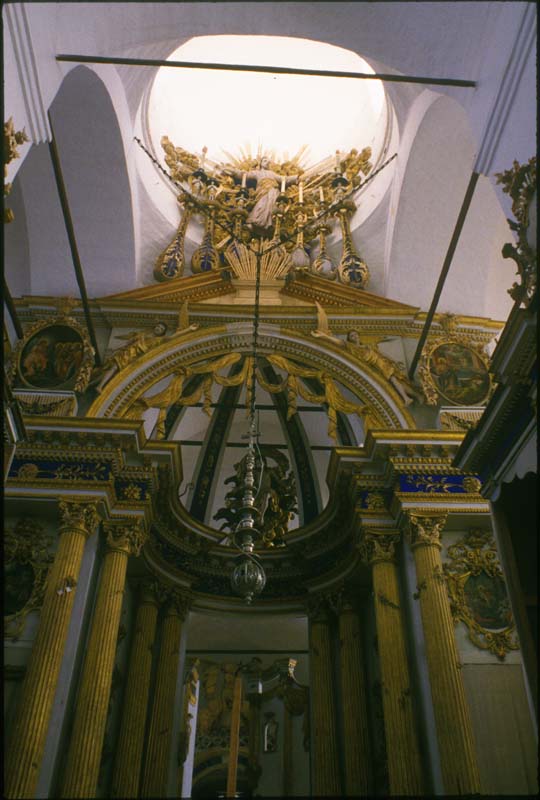
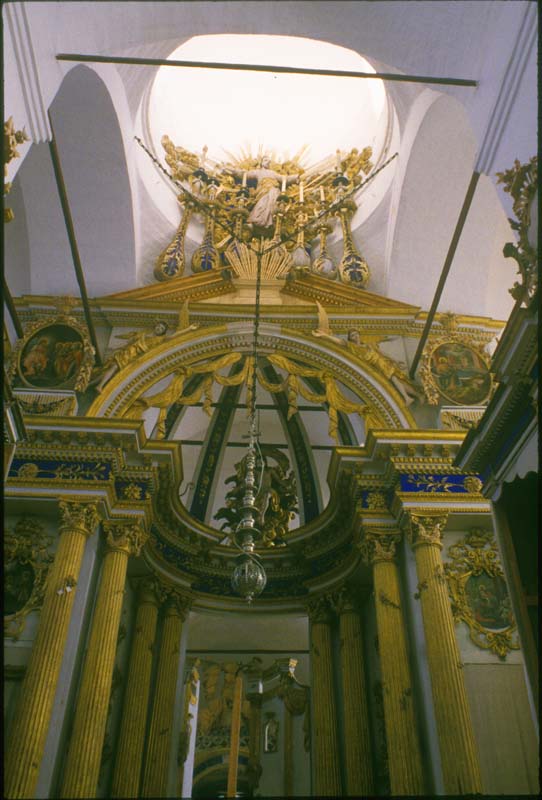
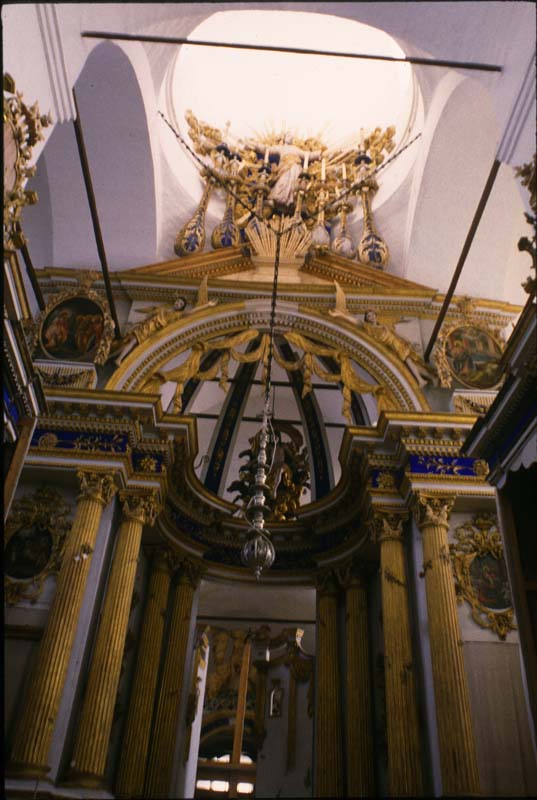
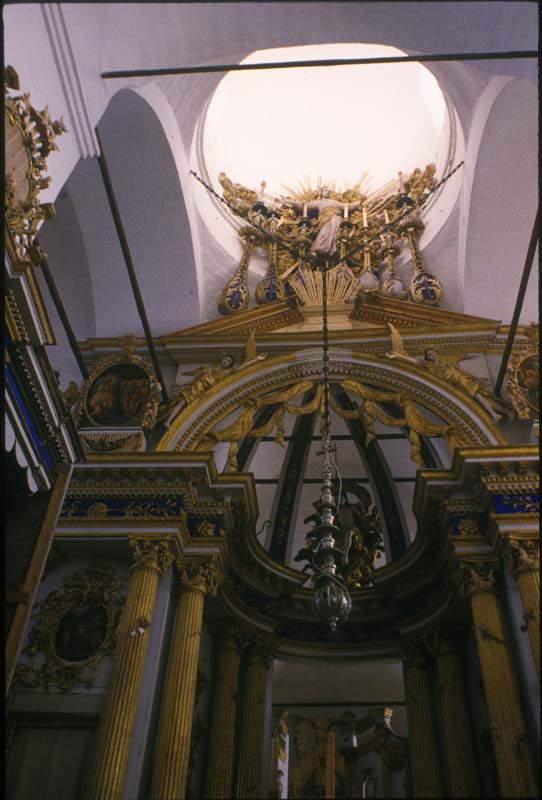
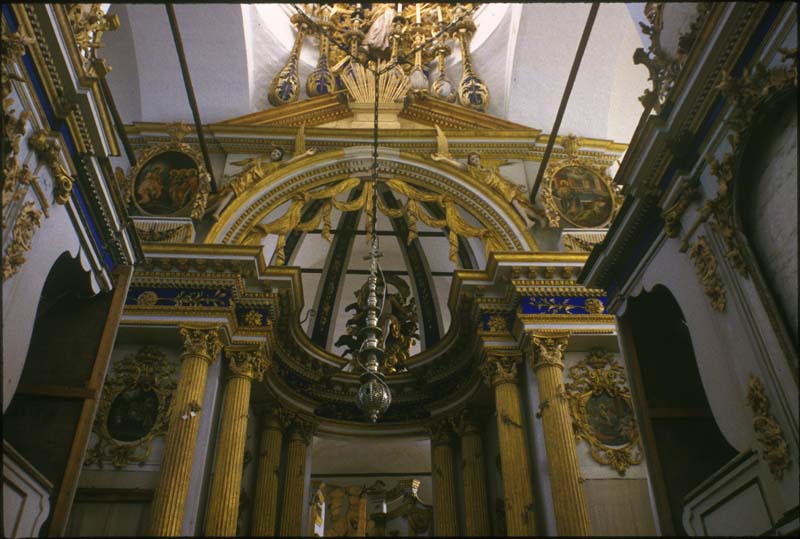
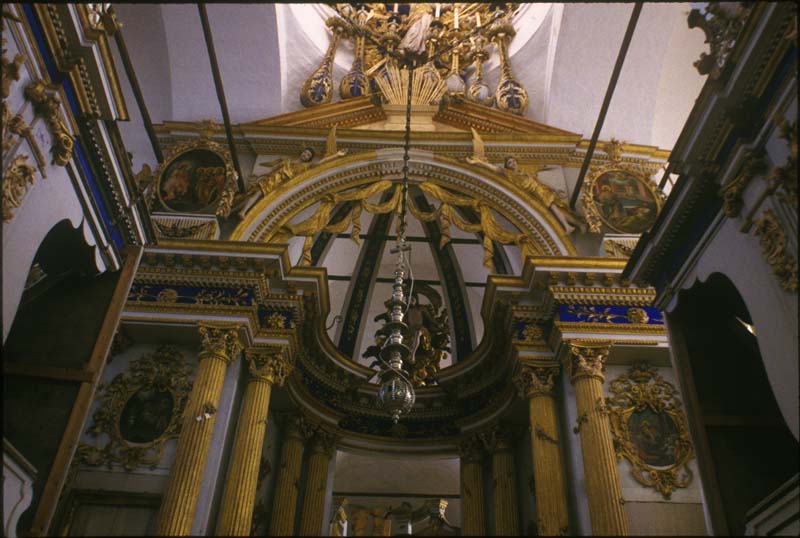
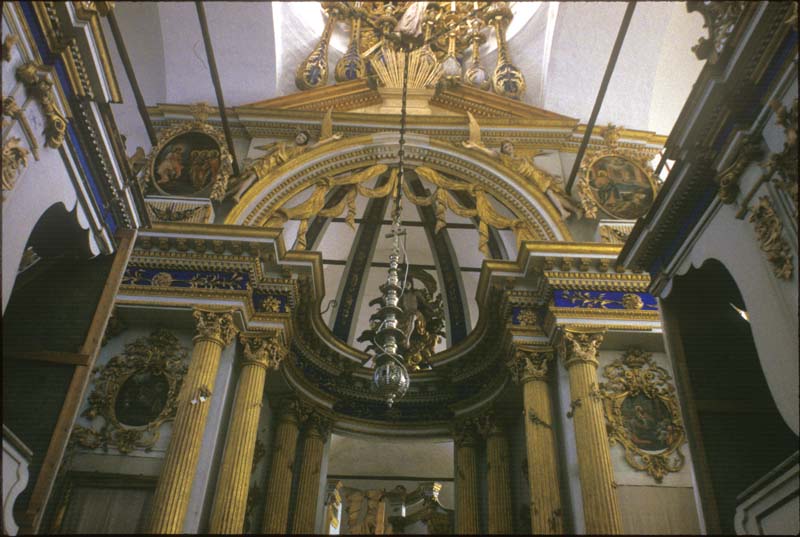
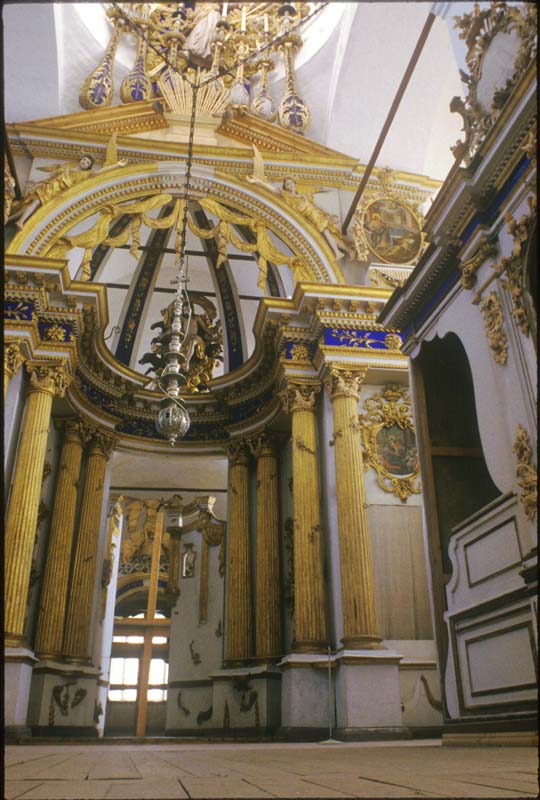
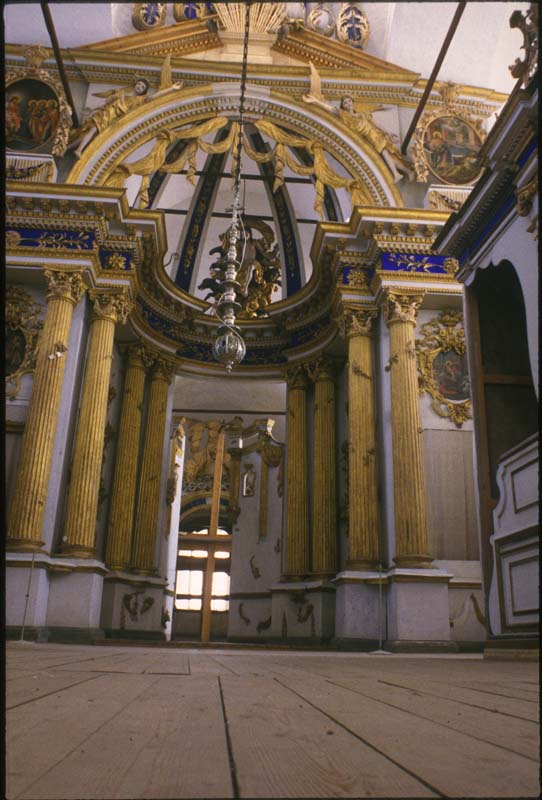
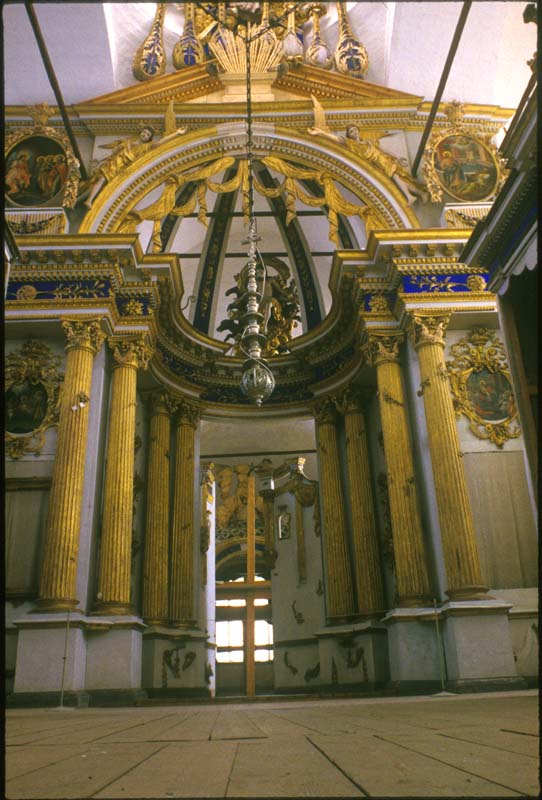
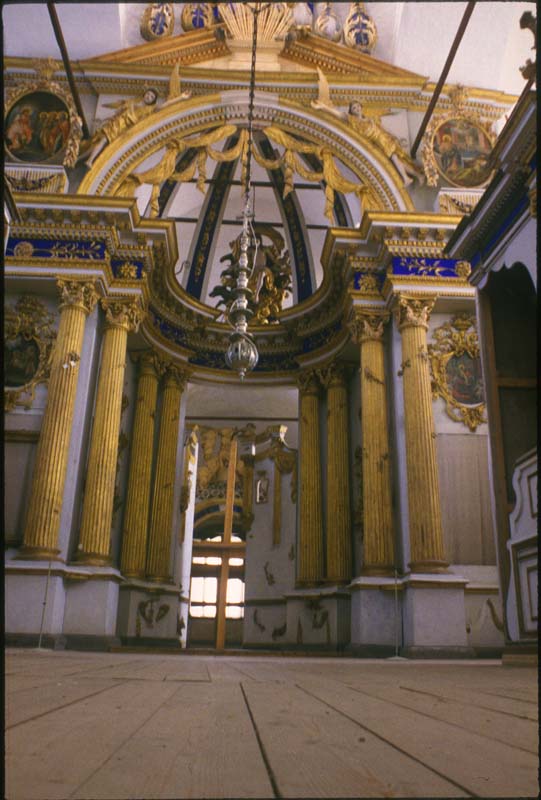
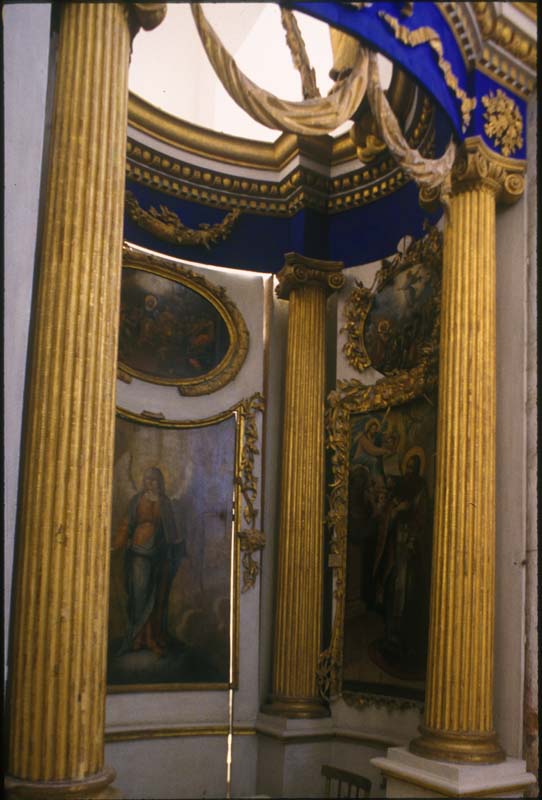
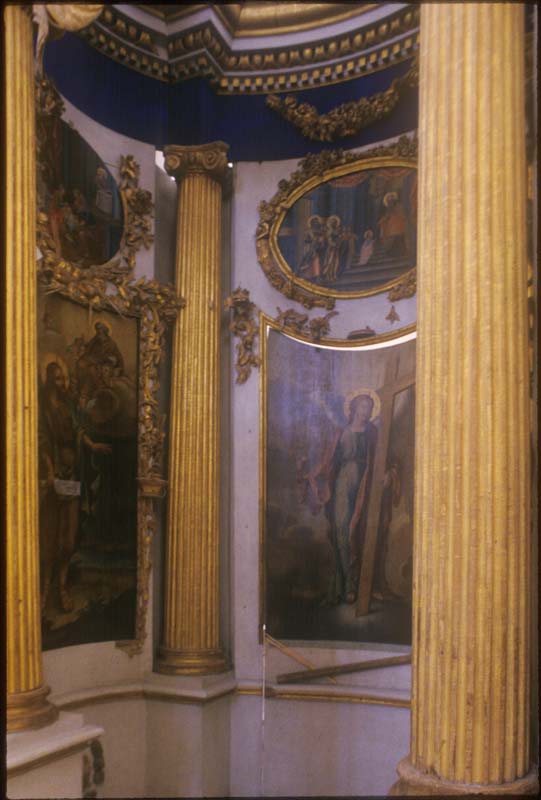
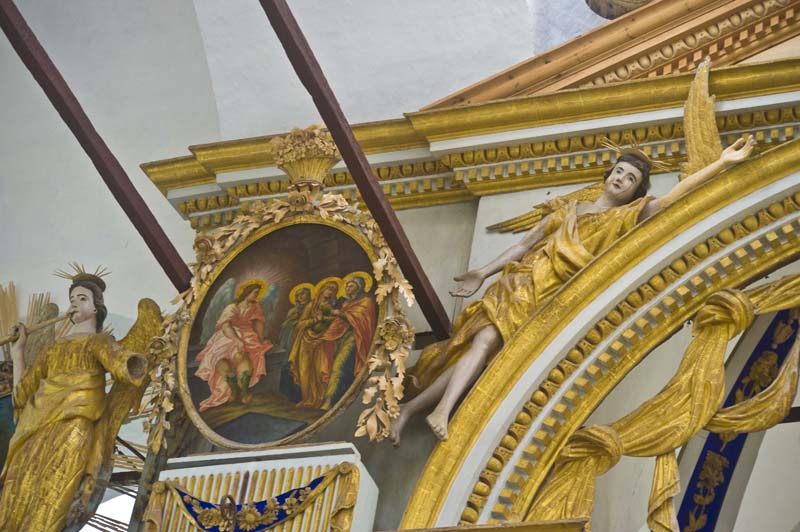
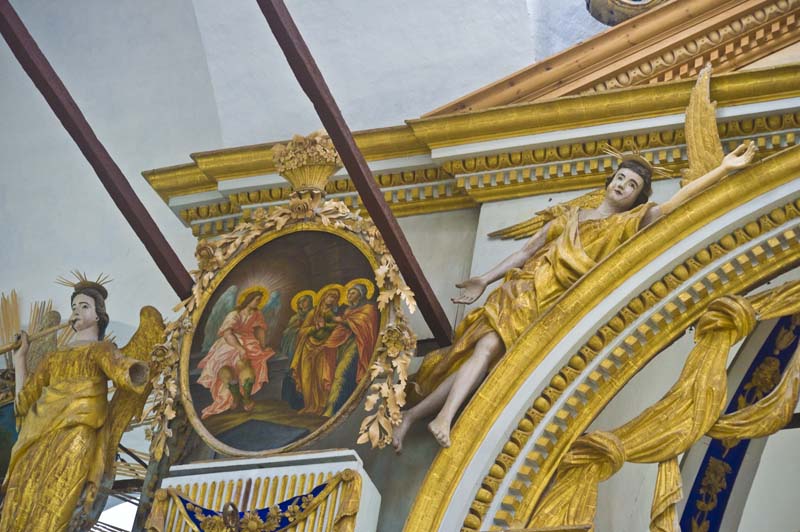
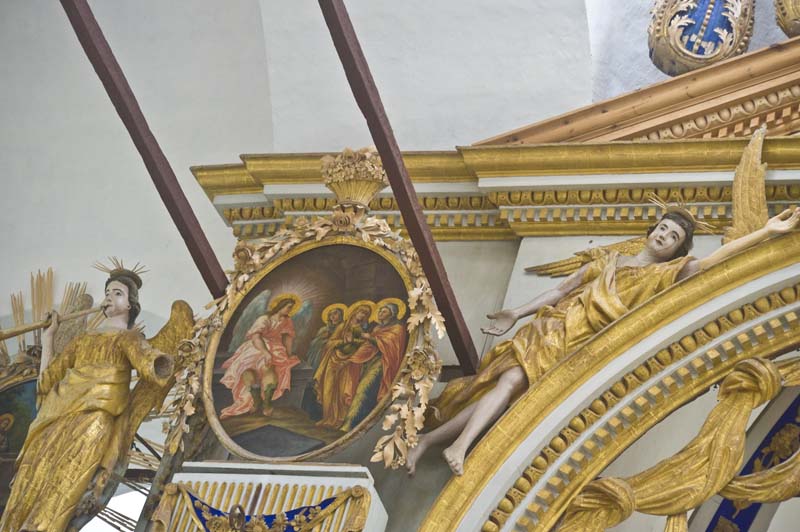
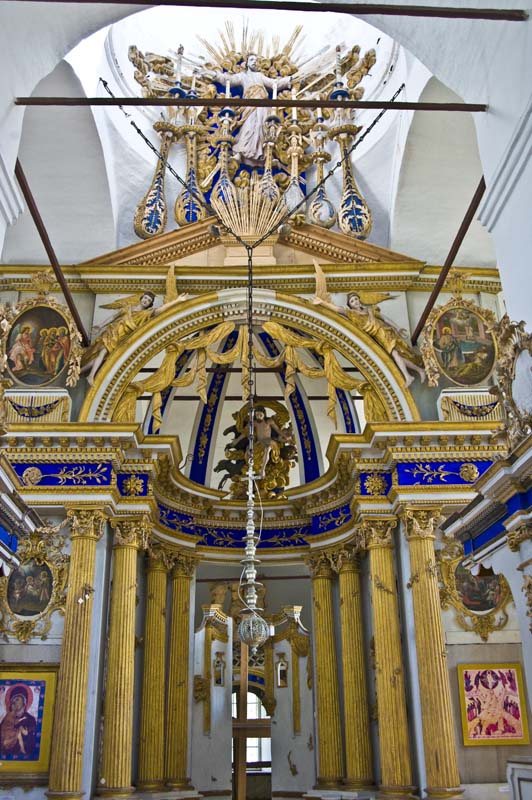
The channeled column shafts and the elaborate Corinthian entablature, as well as sinuous decorative baroque figures, are highlighted in gold on a white background. Angels and cherubim occupy the flanks of the structure and guard its center. Despite the loss of certain elements during the Soviet period, the iconostasis is relatively well preserved, and Prokudin-Gorsky’s valuable photograph allows a precise reconstruction of its original form.
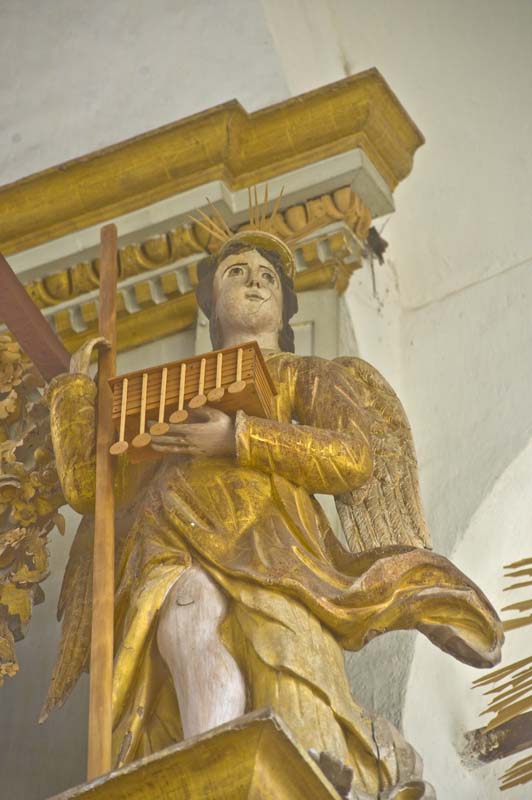
On the first level, the corners of the central space are occupied by statues of angels. Beyond these, the eye discerns the curved walls leading to the Royal Gate. The original design had statues of Moses holding the Tablets of the Ten Commandments, and his brother Aaron with his miraculous rod, placed opposite one another on the curved walls. These two statues in a literal sense prefigure the painted cartouches originally present on the two halves of the Royal Gate: the four Evangelists, the Annunciation and the Last Supper.
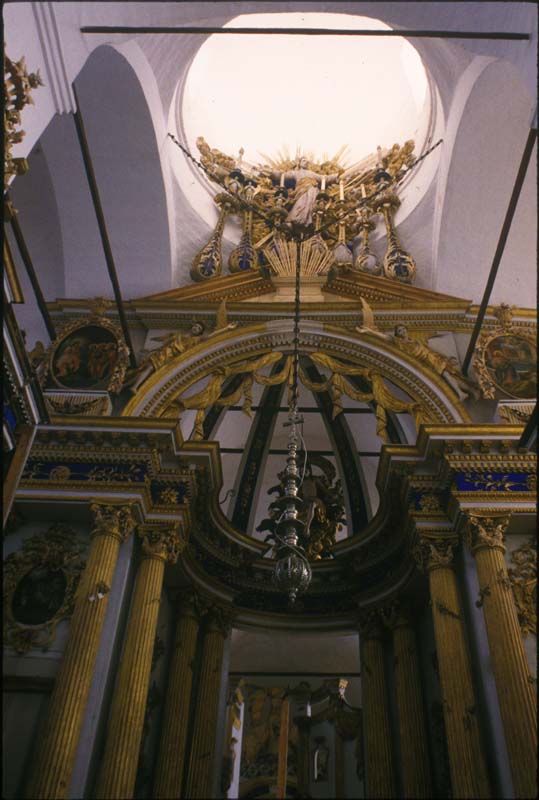
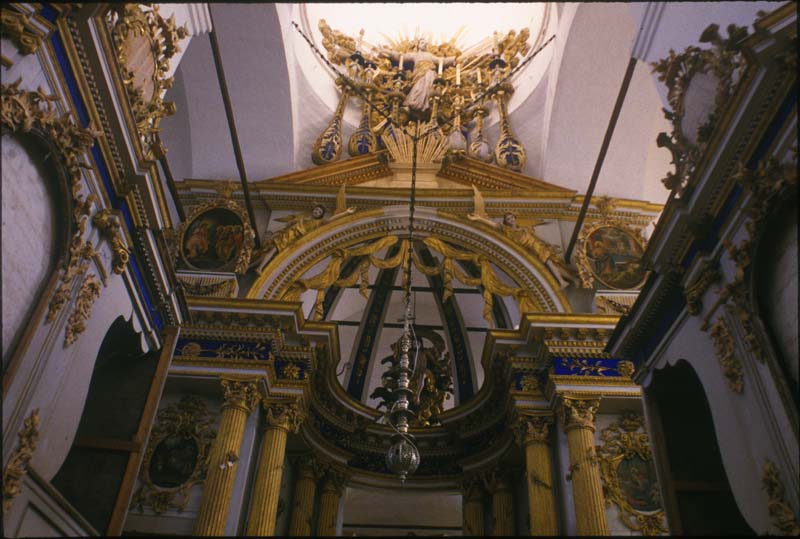
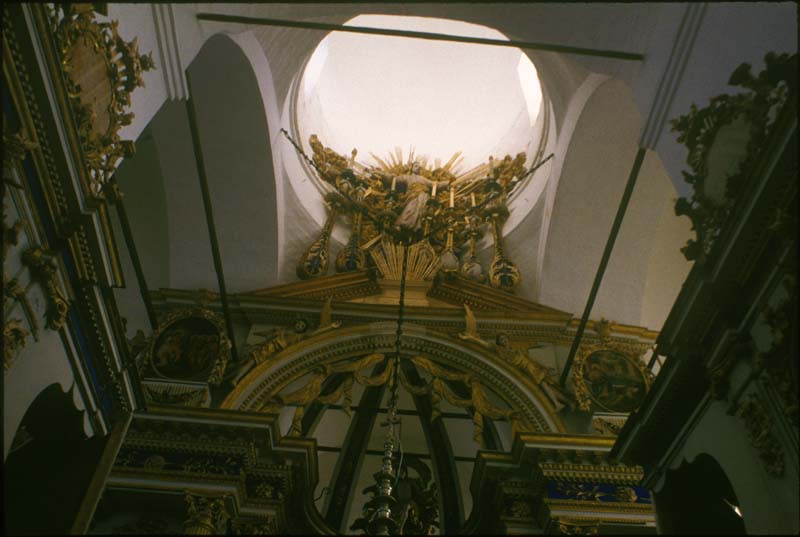
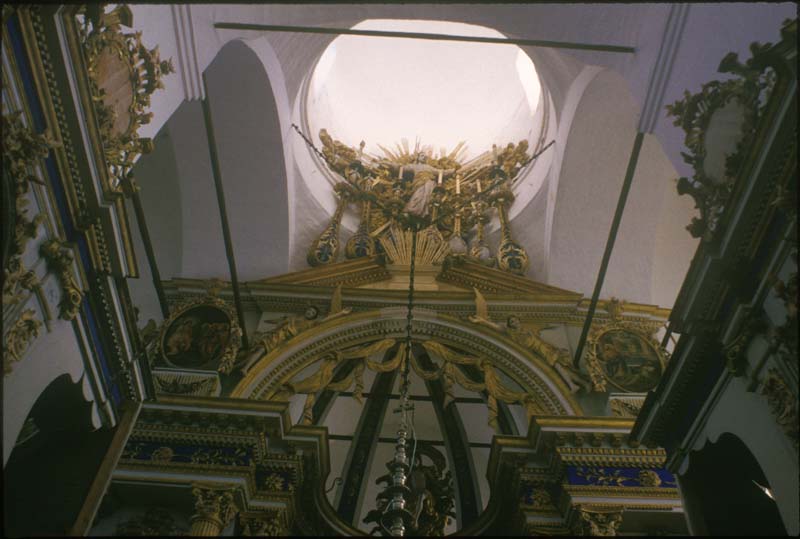
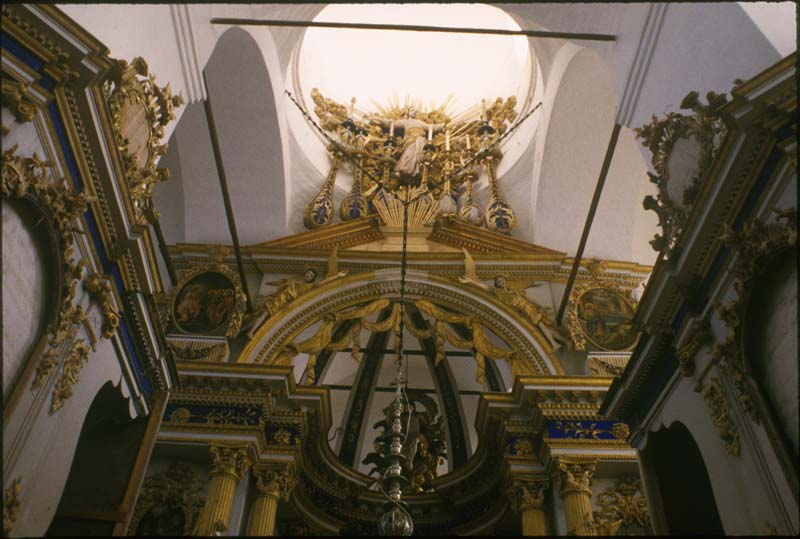
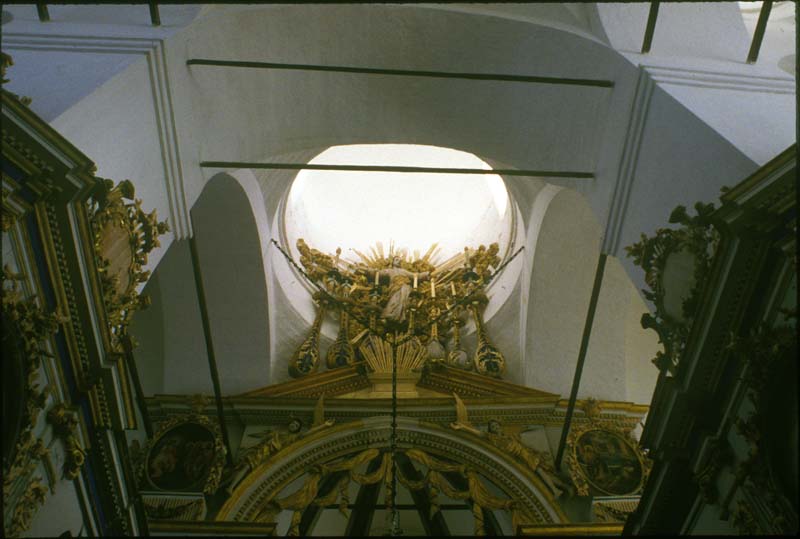
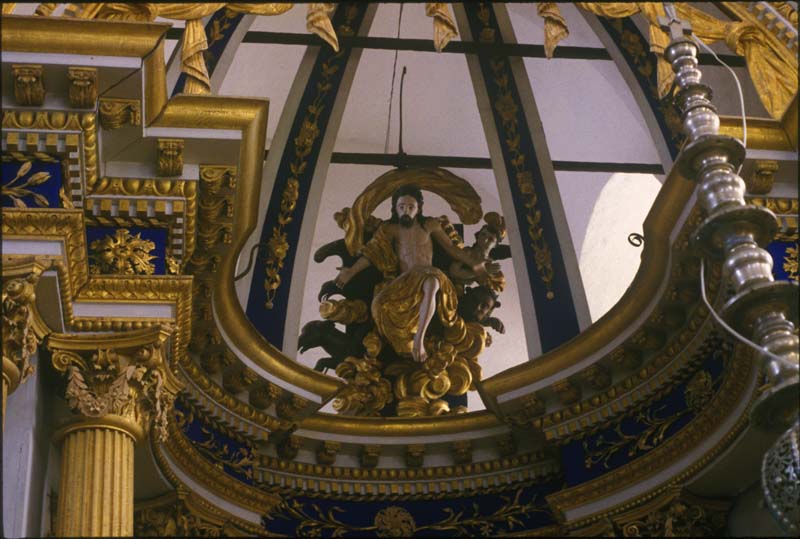
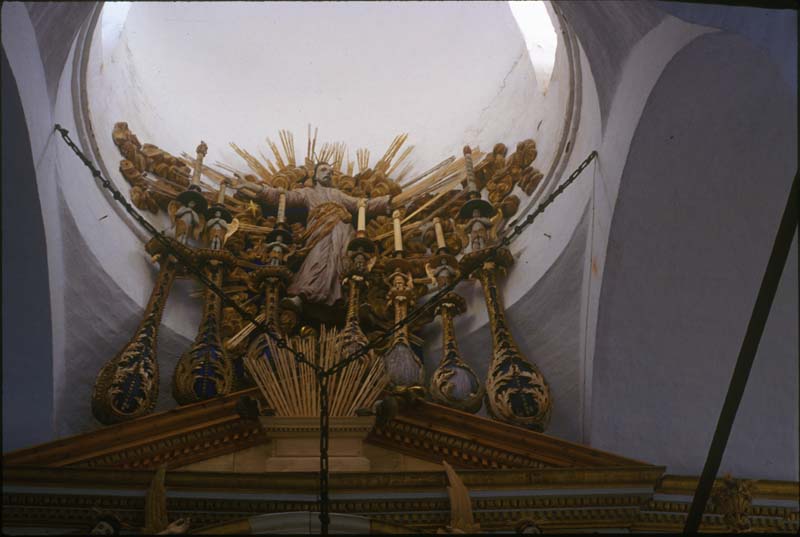
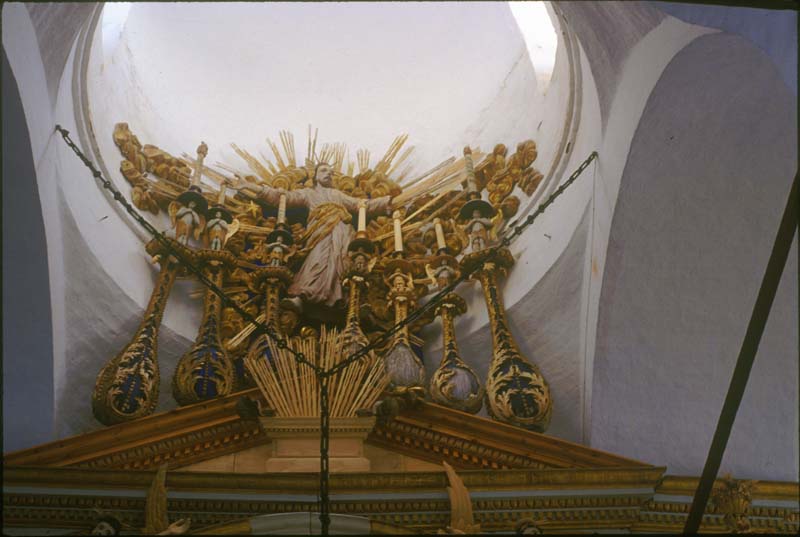
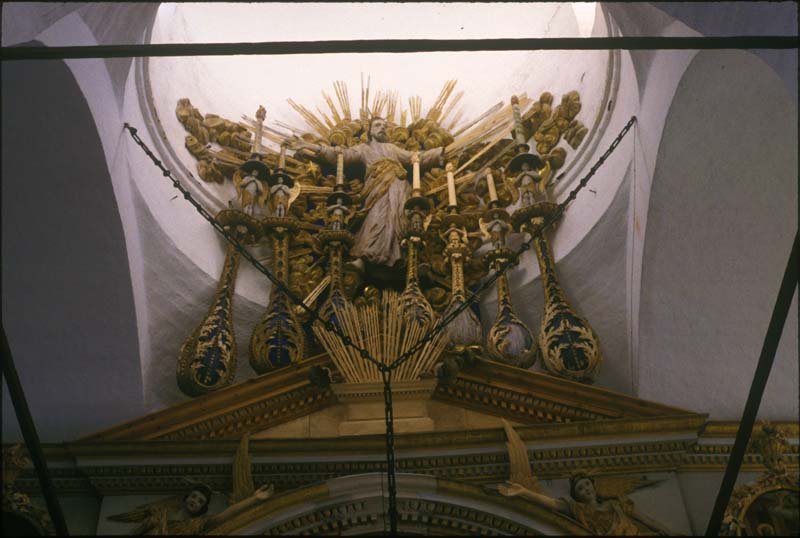
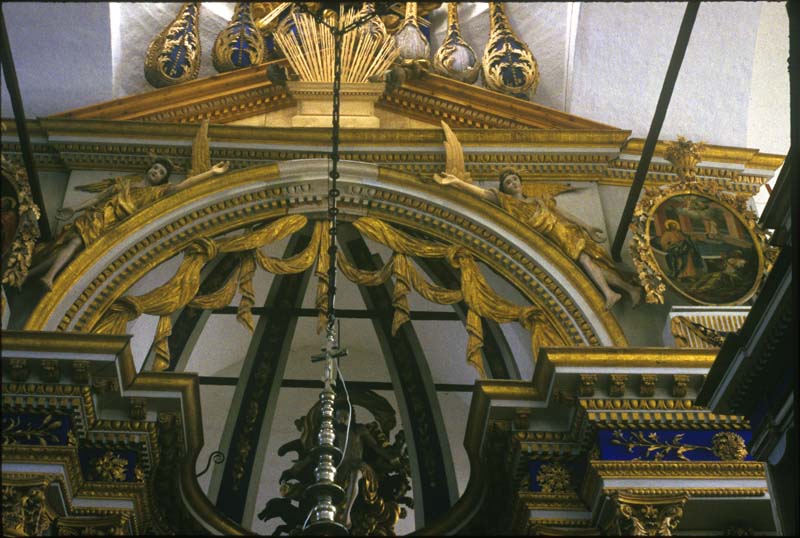
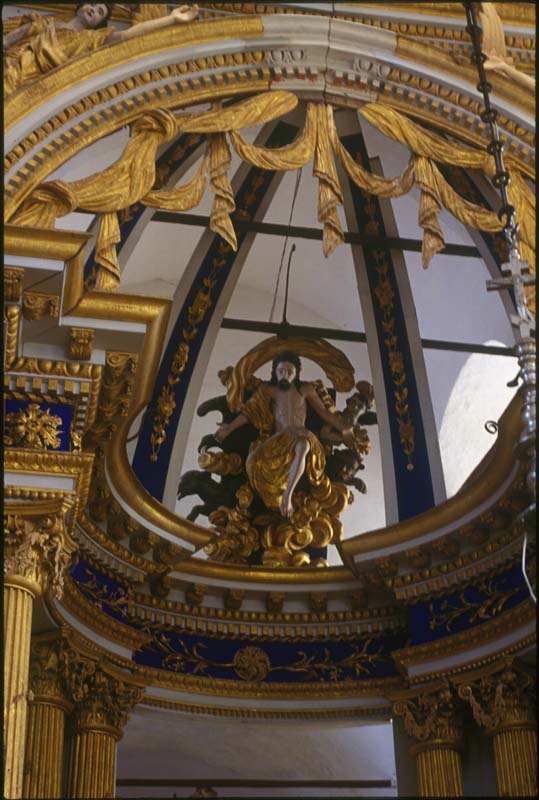
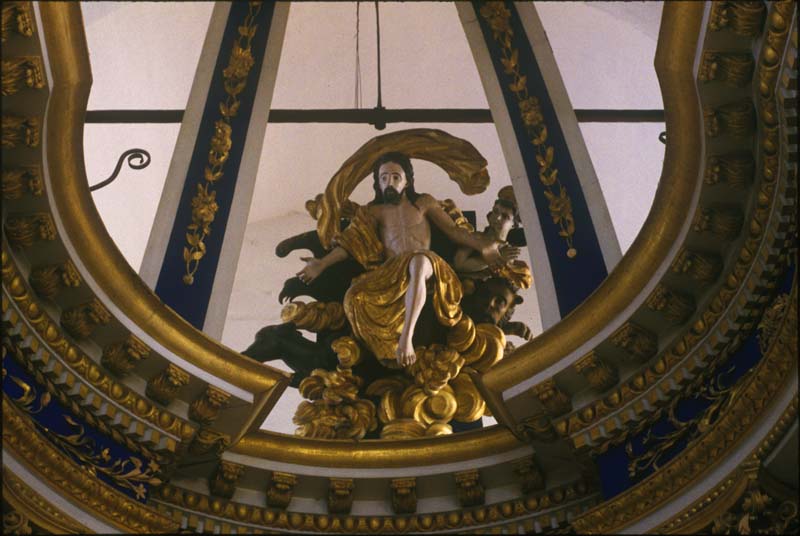
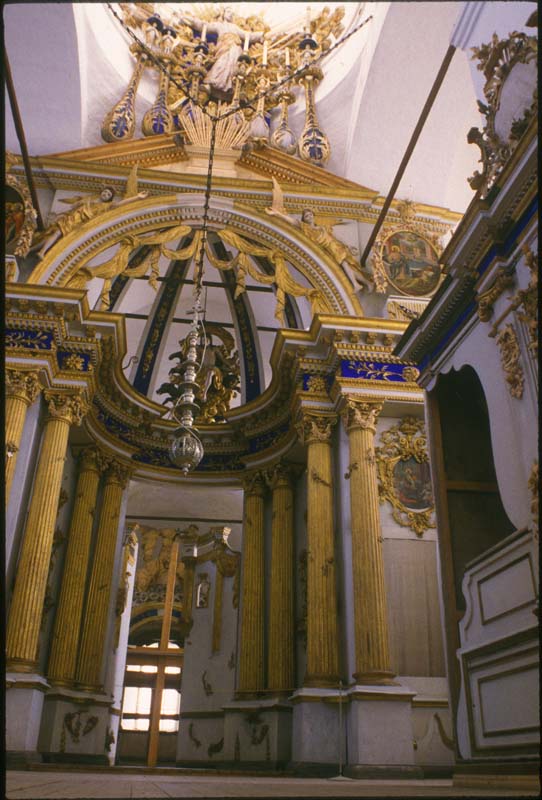
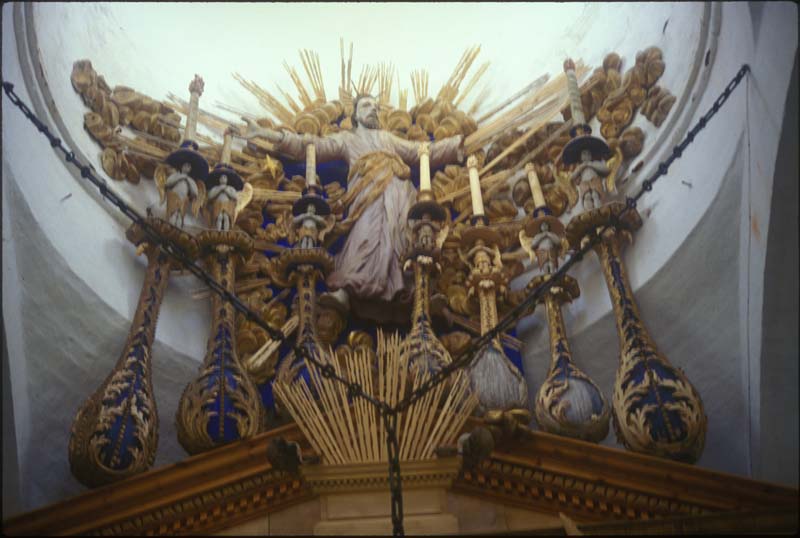
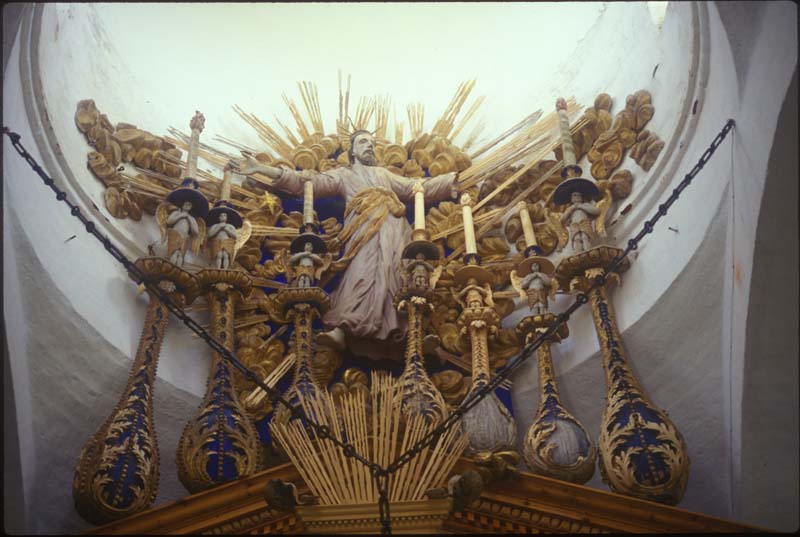
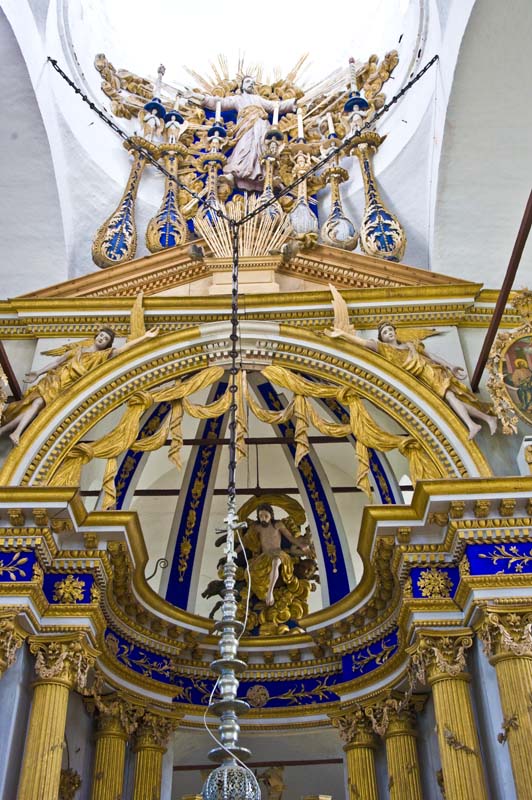
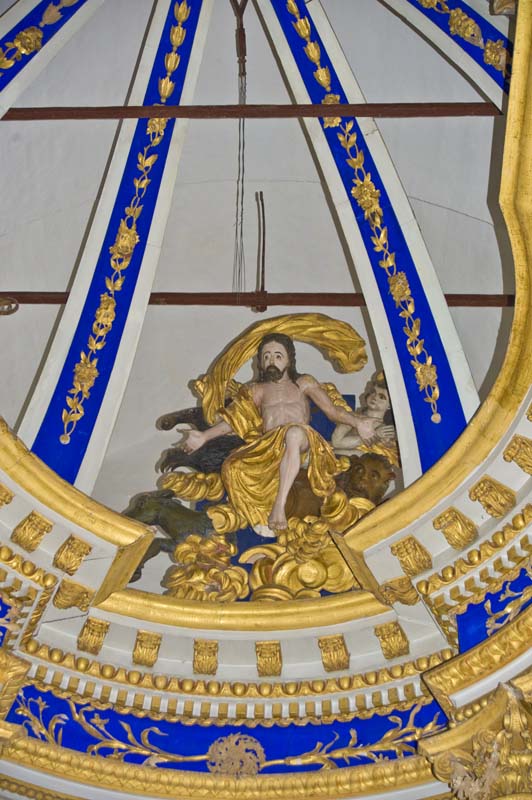
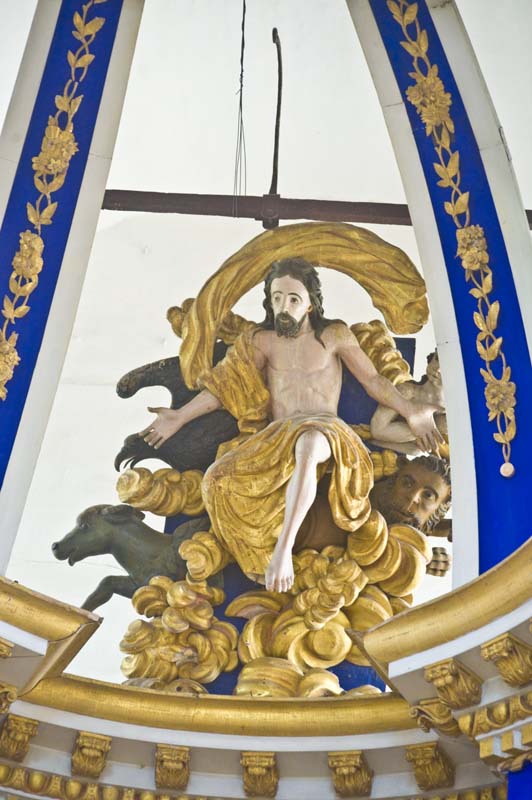
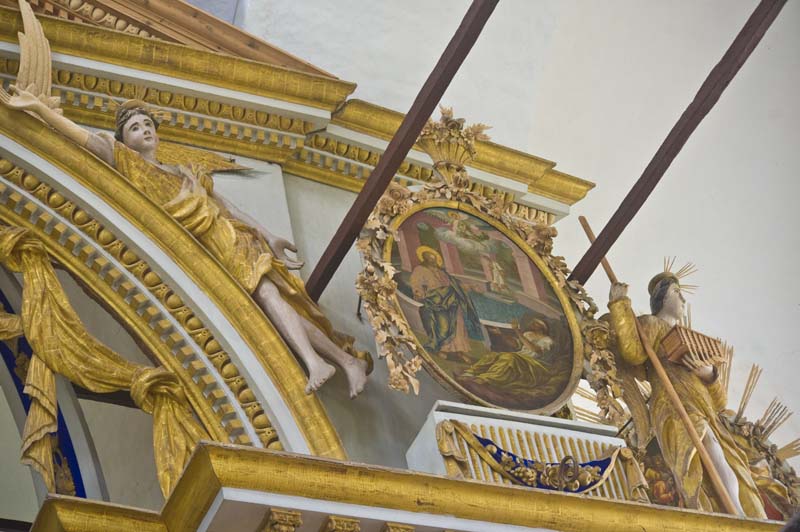
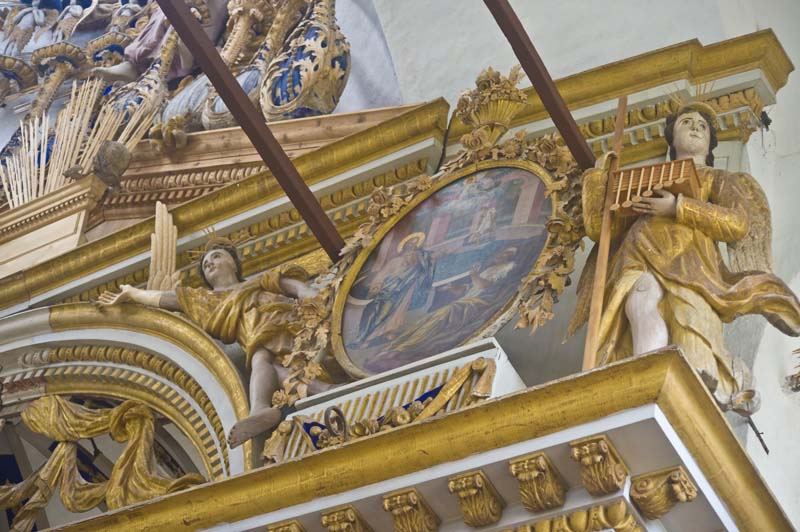
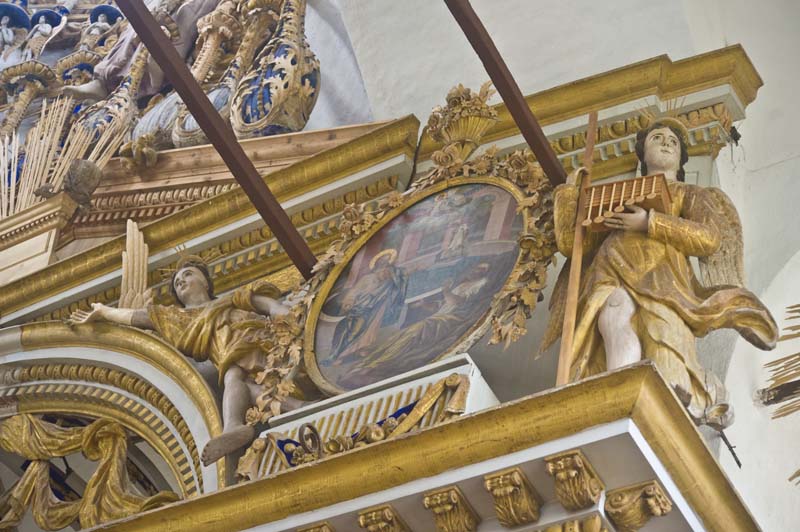
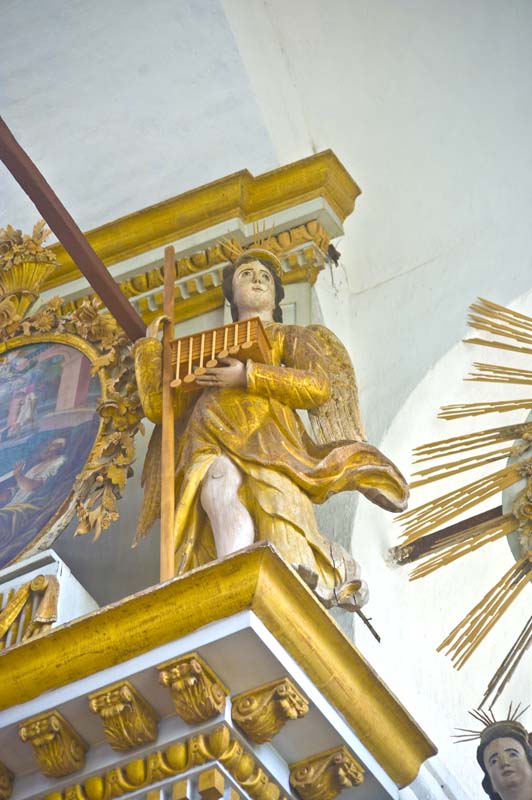
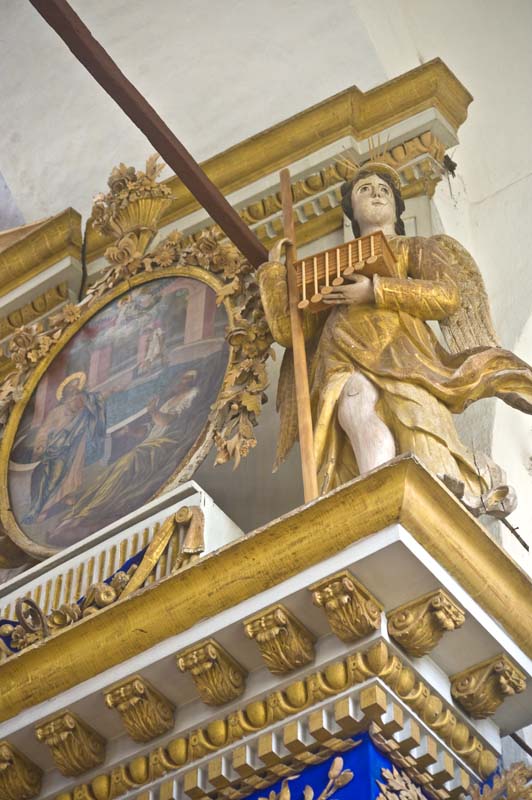
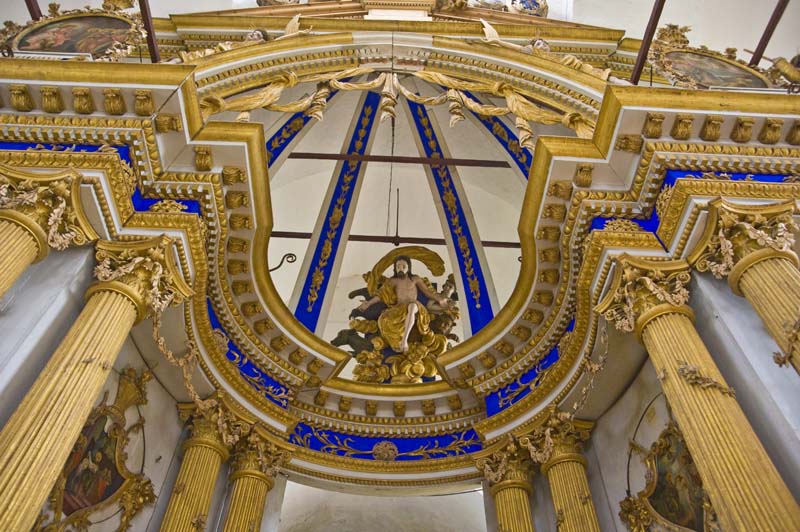
Prokudin-Gorsky, for whatever technical reason, photographed only the lower tier. Moving toward the center of the wooden construction, which is lit from above by the main cathedral dome, the three-dimensional drama of the central space becomes evident through the placement of an array of sculpted figures seen in my photographs. The frame for the Royal Gate ascends to a massive entablature (gold on white, with a deep blue horizontal border), on which rests the shell of a dome formed by a hemispherical section with ribs in the background and gilded draped bunting in the foreground.
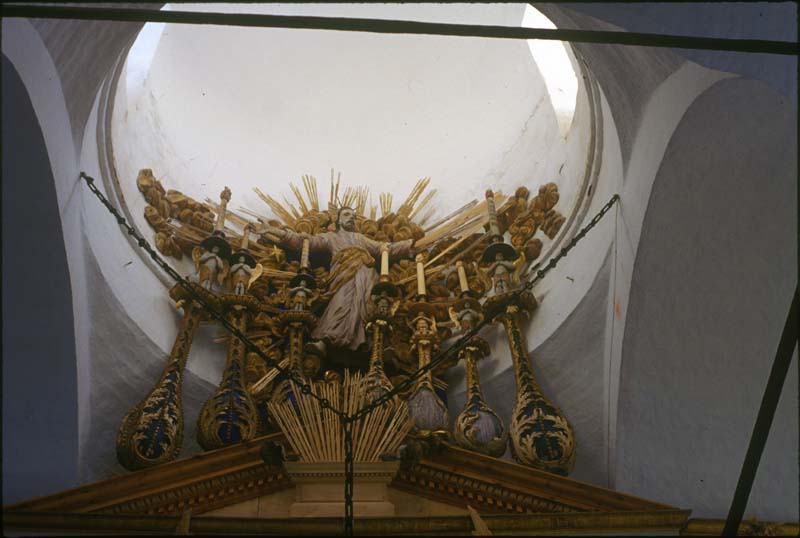
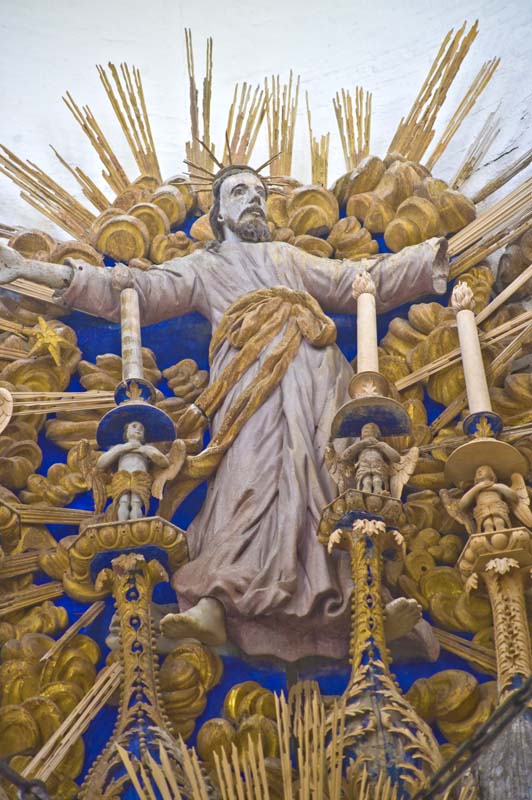
This dramatic display envelops a sculpted figure of Christ clad in a loincloth and ascending to heaven in a cloud of glory. On either side of Christ are the four symbols of the Evangelists: the lion of St. Mark, the angel of St. Mathew, the eagle of St. John and the flying bull of St. Luke. At the very top of the iconostasis, ascending into the drum under the main dome, is another sculpted figure of Christ resurrected, in a glorious aura with angels, rays of light and massive candles — all associated with the Apocalypse.
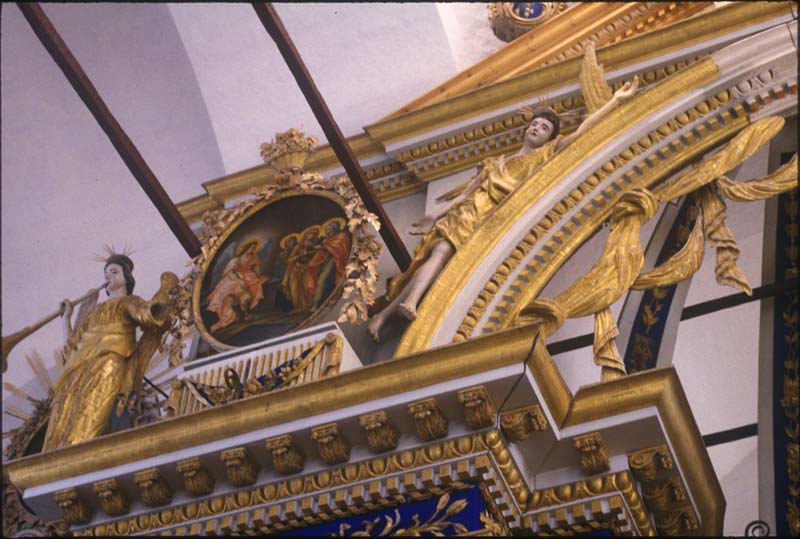
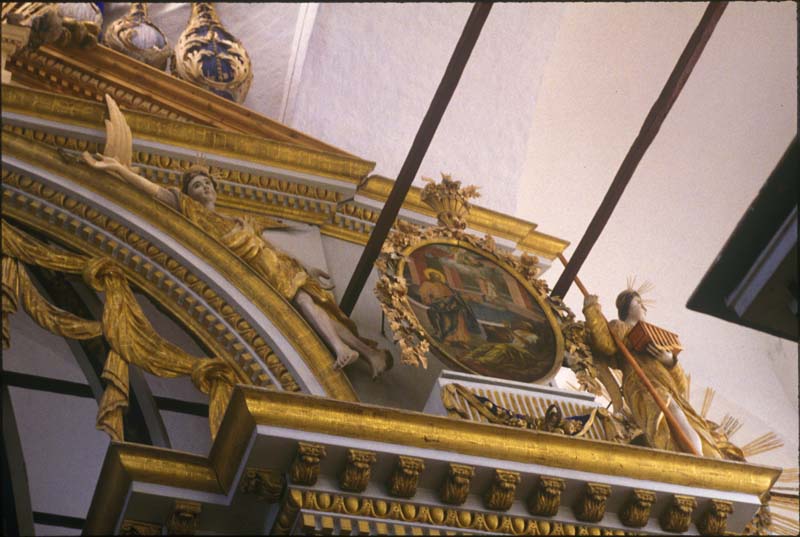
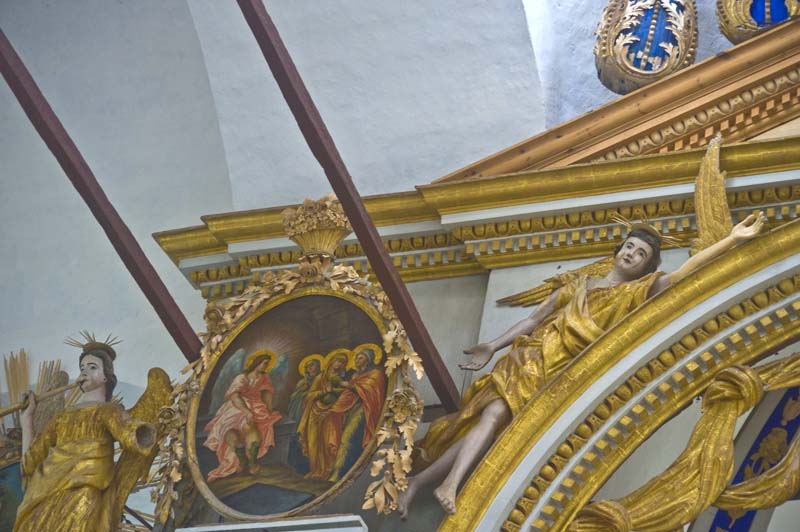
On the top ledge at either side of the iconostasis are more figures of angels (with trumpets of the Last Judgement), the angel holding the Book with Seven Seals, the seven candles of the Apocalypse and paintings of the miracles of Christ in cartouches formed of carved wood in a foliate pattern. The faces of the angels have a naïve sweetness characteristic of provincial art. Although the Orthodox Church generally frowned on fully sculpted figures in church art, these statues continue a distinctive tradition of wooden carving throughout the Russian North. Together with its stylistic exuberance, the structure and the theological significance of the Transfiguration Cathedral icon screen are among the richest in Russia.
Text and Photographs: William C. Brumfield